Table of Contents
- The Seven Holy Cities of Hinduism
- Dwarka as a Sacred City
- Dwarka in Hindu Scriptures
- Sapta Puri Pilgrimage Traditions
- Religious Significance of Dwarka
- Dwarka's Role Among Seven Cities
- Planning Merit Without Overload
- Char Dham and Sapta Puri Together
- Comparing Ayodhya Mathura and Dwarka
- Moksha Merit in Daily Acts
- Pairing with Char Dham Itineraries
- The Seven Cities at a Glance
- How We Combine Sapta Puri Intent with Dwarka Logistics
- Dwarka as Maya's Coastal Counterpart
- One-Week Gujarat Purist Route
- Sankalpa at Gomti
- Local tip from our editor
- Common mistake
- Verify before you go
This guide covers Dwarka among the seven Sapta Puri holy cities in detail; for overview see Dwarka guide.
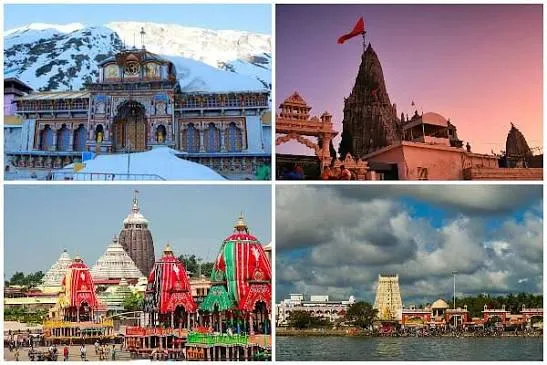
Most visitors know Dwarka as a Char Dham site. Older Sanskrit tradition also lists it among the Sapta Puri — seven cities especially linked to pilgrimage and moksha. Knowing both frames helps explain why Jagat Mandir feels like more than just another Krishna temple.
The Seven Holy Cities of Hinduism
Traditional Sapta Puri lists commonly include:
- Ayodhya — birthplace of Lord Rama
- Mathura — birthplace of Lord Krishna
- Maya (Haridwar) — gateway to the Himalayas
- Kashi (Varanasi) — city of Lord Shiva
- Kanchi (Kanchipuram) — temple city of the south
- Avantika (Ujjain) — home of Mahakaleshwar
- Dwarka — Krishna's capital on the western sea
Spellings and local emphases vary; the shared theme is that these cities are uniquely purifying to visit. Dwarka sits beside its Char Dham identity as Krishna's coastal kingdom.
Dwarka as a Sacred City
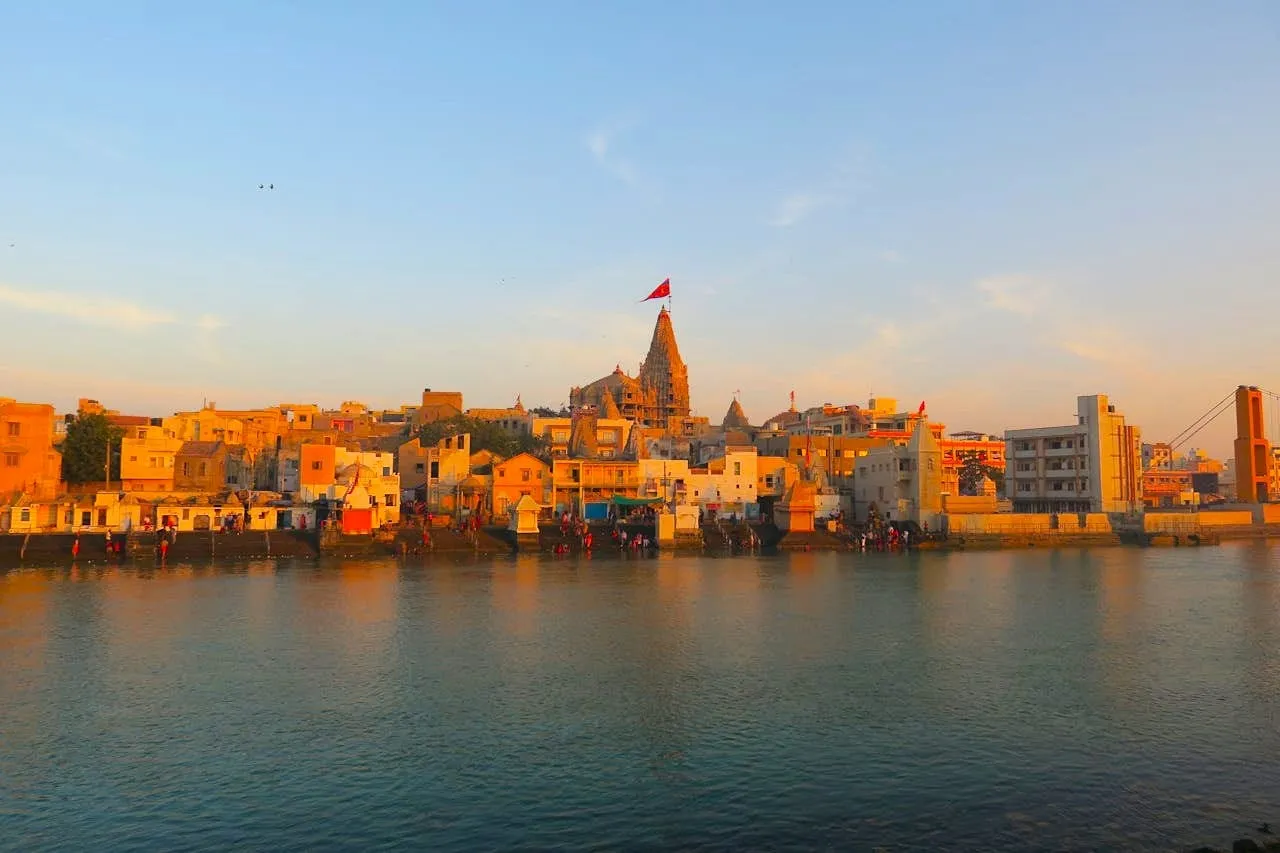
Sapta Puri thinking treats Dwarka as a sacred urban field, not a single building. Bet Dwarka and Sudarshan Setu extend the sacred shoreline. Gomti Ghat and Sudama Setu are part of the same geography. Rukmini Temple completes relational devotion within the city.
Conduct in lanes and queues matters as much as checklist temples. The whole town participates in the holiness, not only the sanctum.
Dwarka in Hindu Scriptures
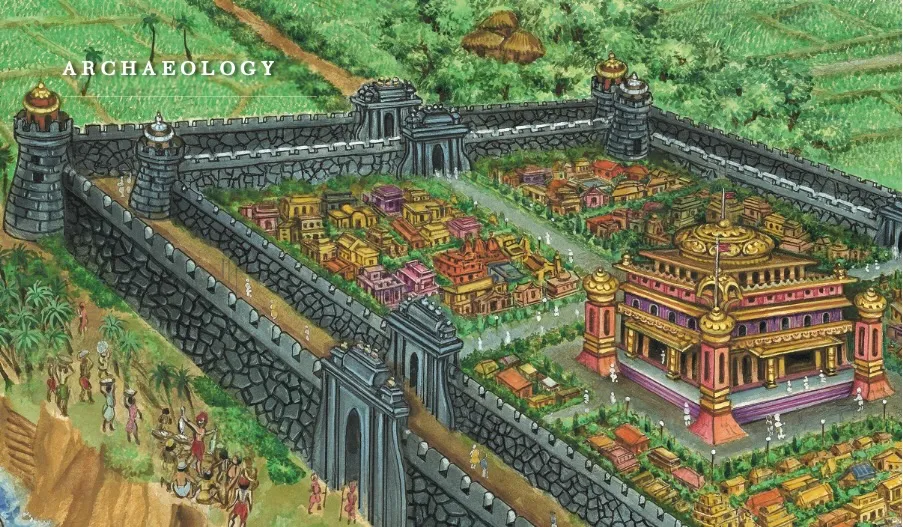
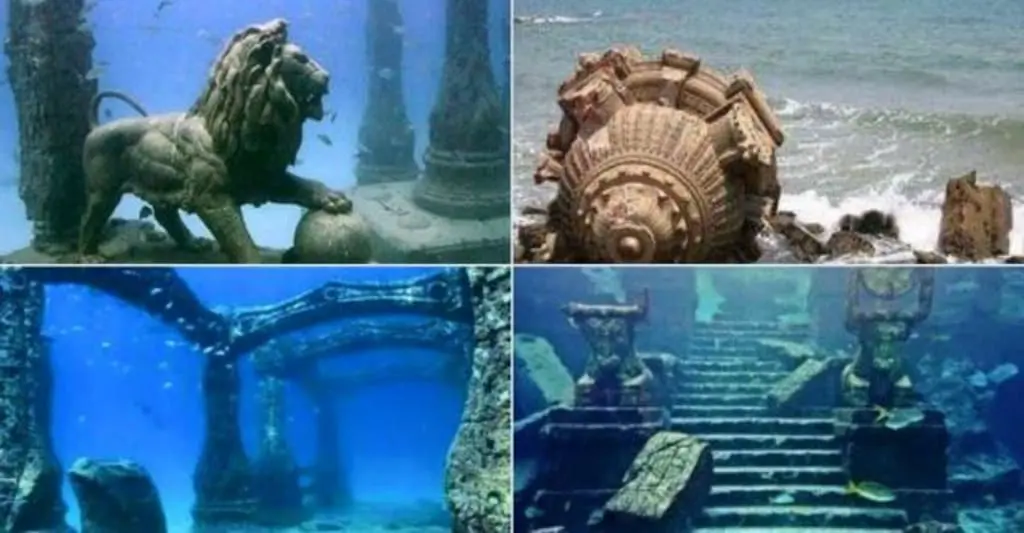
Dwarka appears in the Mahabharata, Harivamsa, Bhagavata Purana and related texts as Krishna's capital built by Vishwakarma. The city's submergence after Krishna's departure is a key narrative. The name "Dwarka" (gateway) ties to moksha — the door through which the soul passes to liberation.
Scriptural Dwarka is a city of golden palaces, divine rule, and the Bhagavad Gita's moral universe. Pilgrims walking today's lanes join that textual tradition whether or not they have read every verse.
Sapta Puri Pilgrimage Traditions
Visiting all seven Sapta Puri cities is a lifetime aspiration for many devotees — not a single-vacation requirement. Traditions include bathing at sacred rivers and ghats, temple darshan at each city's principal shrine, and observing conduct appropriate to a moksha-oriented journey.
In Dwarka specifically: Gomti bathing before temple entry, Dwarkadhish darshan, Bet Dwarka circuit, and respectful behaviour in crowded festival weeks. For Char Dham context, see Dwarka Char Dham significance.
Religious Significance of Dwarka
Dwarka is western India's spiritual anchor — Char Dham, Sapta Puri, Krishna's kingdom, and a living temple city. The Sharada Math of Adi Shankaracharya adds monastic authority. Daily flag ceremony, five aartis, and Gomti rituals sustain a tradition millennia deep.
When someone asks why Dwarka feels different from a beach town, Sapta Puri is a good answer: it was never meant to be scenic alone. It was meant to change the pilgrim who walks it. Plan with our itinerary planner and first-time checklist.
Dwarka's Role Among Seven Cities
Sapta Puri lists Ayodhya, Mathura, Maya (Haridwar–Kashi axis), Kanchi, Avanti (Ujjain), Kurukshetra, and Dwarka — each linked to moksha merit in scriptural geography. Dwarka's entry reflects Krishna's kingdom and the living Jagat Mandir, not beach tourism. Pilgrims who know the list often add intentional ritual — Gomti snan, island darshan, Rukmini visit — to align with tirth-yatra norms. Even a single-day extension for Nageshwar Jyotirlinga connects Shaiva and Vaishnava threads common on Gujarat circuits.
Planning Merit Without Overload
You do not need to visit all seven cities in one trip for Dwarka to "count." Focus on unhurried darshan and one reflective stop — lamp at the ghat or quiet hour at Swaminarayan Mandir — so the Sapta Puri label becomes lived practice rather than brochure vocabulary.
Char Dham and Sapta Puri Together
Many Gujarati families treat Dwarka as both Char Dham west anchor and Sapta Puri entry — plan extra half-day if elders want both framings honoured with separate rituals. Guidebooks conflate the lists; your priest may prioritise one.
Comparing Ayodhya Mathura and Dwarka
Each Sapta Puri city carries a different deity emphasis — Ayodhya Ram, Mathura Krishna birth, Dwarka Krishna kingdom — so devotees from Vaishnav backgrounds often feel Dwarka completes a Krishna arc rather than repeating Mathura. Allow time to explain this to children travelling with you; otherwise the seventh-city label feels abstract. Optional reading of Skanda Purana sections before travel deepens the on-ground experience without adding more stops to a tight schedule.
Moksha Merit in Daily Acts
Sapta Puri merit traditionally ties to bath, darshan, and respectful conduct — not merely ticking a list. Feeding cows near ghats, helping elders in queue, and quiet lamp offering at Gomti count as much as rushing to another city on a map. Dwarka's role is to anchor that mindset for western India travellers.
Pairing with Char Dham Itineraries
Many travel agents bundle Sapta Puri language into Char Dham brochures even when your trip covers only Dwarka — use that overlap to justify unhurried Gomti and island time to companions who fear "missing" sites. Quality of ritual beats quantity of labels on the same journey.
The Seven Cities at a Glance
Ayodhya, Mathura, Haridwar, Varanasi, Kanchipuram, Ujjain, and Dwarka form Sapta Puri — moksha is traditionally linked to dying or bathing in these tirthas. Dwarka's coastal Krishna narrative distinguishes it from inland centres. Many pilgrims discover the Sapta Puri overlap only after arrival; use it to prioritise Gomti snan, island darshan, and unhurried aarti over checklist tourism.
Dwarka's coastal Krishna narrative differs from inland Sapta Puri cities — use the framework to prioritise Gomti snan and island darshan over rushing every shop and viewpoint. Kartik month amplifies Sapta Puri merit beliefs — book hotels early.
Completing all seven cities is a lifetime project for most — Dwarka alone still earns Sapta Puri merit in common belief. Pair reading with one slow Gomti snan to make the framework tangible.
For overview see Dwarka. Dwarka anchors the western Sapta Puri list — Ayodhya, Mathura, Maya (Haridwar), Kashi, Kanchi, Ujjain, Dwarka — so completing Dwarka darshan carries all-India pilgrimage weight beyond Gujarat alone.
How We Combine Sapta Puri Intent with Dwarka Logistics
I frame each site visit as puri vow: Gomti snan (purification), Dwarkadhish (Krishna pada), Bet Dwarka (Krishna home). That sequence fits two days without rushing Rukmini or Nageshwar — trying all seven puris in one lifetime is theology; trying all Dwarka sites in one day is exhaustion.
Dwarka as Maya's Coastal Counterpart
While Haridwar holds Maya puri status on Ganga, Dwarka represents Krishna's royal puri on the sea — different elements, same pilgrimage intent. When chanting sankalpa, many Gujarati families name all seven cities even if physically visiting only Dwarka this trip.
One-Week Gujarat Purist Route
Dwarka (2 nights) → Somnath (1) → Junagadh/Gir (1) covers western puri intent plus nature — ₹8,000–₹15,000 mid-range per person excluding trains. Mathura/Ayodhya/Kashi remain separate trips for most Gujaratis.
Sankalpa at Gomti
Many families chant seven puri names during Gomti snan — ask family elder for exact wording; priests at ghat do not always lead sankalpa.
Local tip from our editor
If you are visiting Dwarka because of its Sapta Puri status, build in time for one slower ritual stop such as Gomti snan or evening aarti so the sacred-city idea becomes lived experience, not just reading material. Even a short quiet hour changes how the town feels.
Common mistake
Pilgrims often collect the label of holy city without engaging the practices that explain why Dwarka holds that place in tradition.
Verify before you go
Confirm the temple and ghat timings you want to pair with your sacred-city visit, especially during festival days.
Plan Your Dwarka Trip
Written by
Lead Editor & Pilgrimage Guide · Independent Dwarka travel guide
Last updated: August 7, 2026
We verify temple timings, routes, and fares against notice boards and recent pilgrim reports. See our editorial policy.