Char Dham · Dwarka, Gujarat
Dwarkadhish Temple, Dwarka
The 2,200-year-old shrine of Lord Krishna, King of Dwarka — with its golden flag and five-storey shikhara rising above the Arabian Sea.
Location
Dwarka, Gujarat
Darshan Hours
6:30–1:00 & 5:00–9:30
Shikhara Height
78 metres (5 storeys)
Significance
One of 4 Char Dham
Page Navigation (Table of Contents)
Temple History and Significance
The Dwarkadhish Temple, known locally as Jagat Mandir ("the temple of the world"), is the main shrine of Devbhumi Dwarka and one of the four sacred Char Dham sites. Tradition holds that the original shrine was built by Vajranabh, Krishna's great-grandson, around 2,200 years ago on the spot where Krishna's palace once stood. The structure you see today was largely rebuilt in the 16th century with support from the Gaekwads of Baroda and the Acharyas of the Vallabha and Nimbarka sampradayas.
The sanctum sanctorum houses the idol of Dwarkadhish — Lord Krishna in his four-armed form as the King of Dwarka, holding the shankh (conch), chakra (discus), gada (mace) and padma (lotus). The idol is made of shiny black stone and stands beneath a beautifully carved canopy. The temple complex also includes shrines to Balarama, Devaki, Vasudeva, Rukmini, and several other deities.
Hindu scripture says that after Krishna left his mortal body, the ancient city of Dwarka was swallowed by the sea. Marine archaeological work off the modern coast has found submerged stone structures, anchors and pottery at depths of 20–40 metres — findings that many link to the legend of Krishna's sunken Dwarka. For pilgrims on the Dwarka–Somnath circuit, this temple is the centrepiece of the western Char Dham leg.
The trust that manages daily operations — often referred to locally as the Dwarkadhish Temple Trust — coordinates aarti schedules, seva bookings, festival arrangements and maintenance of the shikhara and flag system. As an independent travel editor I do not speak for the trust; pilgrims should treat notice boards near Moksha Dwar and official announcements as authoritative when timings shift. What I can share from repeat visits is that the temple runs on ritual clock time, not tourist convenience. When Rajbhog ends and the doors close for the afternoon, they close — plan lunch and Bet Dwarka logistics accordingly.
Dwarka’s position on the Arabian Sea shaped Krishna lore and modern pilgrimage alike. Storms, tidal swings and monsoon swell remind you that this is a coastal shrine, not an inland city temple. That maritime context explains why Bet Dwarka, Okha ferry traffic, and Sudarshan Setu matter as much as the main sanctum for many devotees. Jagat Mandir is the crown; the district circuit is the full crown jewels set.
Architecture of Jagat Mandir
The Dwarkadhish Temple is built in Nagara style on a plinth of carved sandstone and limestone. Its most striking feature is the five-storey shikhara (spire), rising 78 metres and supported by 72 carved pillars representing Krishna's 72 disciples. The shikhara is topped by a golden kalash (finial), visible from across Dwarka town and the coastline.
The temple has two main gateways. The northern entrance, called Moksha Dwar (the Gate of Salvation), is the main entrance for pilgrims. The southern entrance, Swarga Dwar (the Gate of Heaven), leads down a flight of 56 steps directly to Gomti Ghat where the holy Gomti River meets the Arabian Sea. Devotees traditionally bathe at the ghat before climbing the steps to enter through Swarga Dwar — a ritual that connects the river, the sea and the temple in a single sacred ascent.
Inside, the garbhagriha (sanctum) is reached through a series of mandapas (halls) decorated with intricate stone carvings depicting scenes from Krishna's life. The Sabha Mandap and the main shrine are separated by ornately carved doorways. The temple's Chalukya-influenced design, with its layered cornices and sculpted friezes, reflects centuries of patronage by Gujarat's royal houses and makes Jagat Mandir one of the finest surviving examples of medieval temple architecture on the Saurashtra coast.
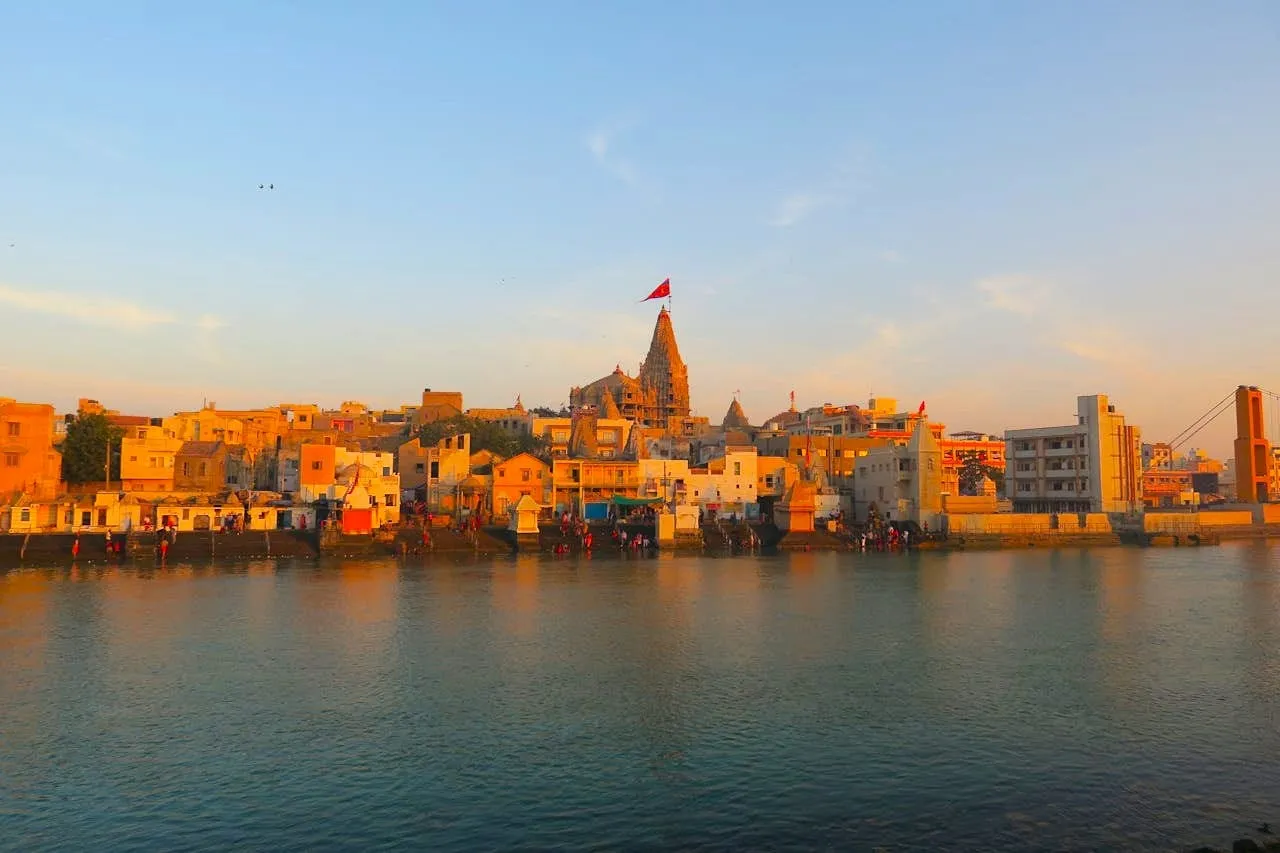
First-time visitors often ask where to stand for the best exterior view. My answer is Gomti Ghat at sunset — the shikhara catches the last light while pilgrims bathe below. Inside, do not rush through the mandapas; the carved panels reward slow walking even when crowds push forward. The 56 steps of Swarga Dwar are steep for elders — use the railings after rain when stone can be slick.
| Feature | Detail | Visitor note |
|---|---|---|
| Shikhara height | ~78 metres | Flag changes 5× daily |
| Moksha Dwar | North gate — main entry | Lockers & shoe stalls here |
| Swarga Dwar | South gate — 56 steps to Gomti | Traditional dip-then-climb route |
| Sabha Mandap | Assembly hall before sanctum | Aarti viewing when inner queue full |
| Garbhagriha | Inner sanctum — Dwarkadhish murti | No phones; men may remove upper garment |
Dwarkadhish Temple Darshan Timings
The temple follows a daily schedule of darshan and aarti that has changed little over the centuries. It opens before dawn for Mangal Aarti at 6:30 AM and stays open until around 1:00 PM, when it closes for an afternoon rest. Evening darshan resumes at 4:00 PM and continues until the final Shayan Aarti and closing around 9:30 PM.
Five major aartis mark the day: Mangal Aarti (6:30 AM), Shringar Aarti (8:00 AM), Rajbhog Aarti (12:00 PM), Sandhya Aarti (5:00 PM) and Shayan Aarti (7:00 PM). Each one marks a change in the deity's adornment and offering. For shorter queues, arrive 20–30 minutes before Mangal Aarti or Sandhya Aarti. During peak season (October–March) and on festival days, queues can stretch well beyond the temple gates.
The afternoon break (~1:00–5:00 PM) is when most pilgrims eat lunch, rest, or visit Rukmini Temple and Gomti Ghat. Do not treat that window as wasted time — it is often the easiest period to solve logistics like laundry, sim recharge, or taxi booking for the next day’s Bet Dwarka loop. Temple staff and volunteers are generally approachable if you ask politely about accessible routes or where to stand during aarti when the Sabha Mandap fills up.
| Ritual / Darshan | Time | Notes |
|---|---|---|
| Mangal Aarti | 06:30 – 07:00 | Early morning darshan |
| Darshan | 07:00 – 08:00 | Morning general darshan |
| Shringar Aarti | 08:00 – 08:30 | Deity adornment |
| Darshan | 08:30 – 09:30 | Shringar darshan |
| Darshan | 09:30 – 10:30 | Mid-morning darshan |
| Banta Bhog / Darshan | 10:30 – 11:00 | Morning offering |
| Darshan | 11:00 – 12:00 | Late morning |
| Rajbhog Aarti | 12:00 – 12:20 | Noon aarti |
| Temple Closed | 12:20 – 16:00 | Afternoon rest |
| Darshan | 16:00 – 16:30 | Evening reopening |
| Darshan | 16:30 – 17:00 | First evening darshan |
| Sandhya Aarti | 17:00 – 17:30 | Sunset aarti |
| Darshan | 17:30 – 18:00 | Evening darshan |
| Darshan | 18:00 – 18:30 | Continued darshan |
| Darshan | 18:30 – 19:00 | Late evening |
| Shayan Aarti | 19:00 – 19:30 | Night aarti |
| Darshan / Pada Darshan | 19:30 – 20:30 | Final darshan of the day |
| Temple Closed | 20:30 – 21:00 | Closing |
Note: Typical afternoon break is around 1:00 PM–5:00 PM (exact minutes vary). See the darshan timings page. Janmashtami and other festival days have extended timings — confirm locally before your visit.
Queue Tips and Waiting Time
On paper, a temple queue sounds simple: arrive, wait, take darshan, leave. In Dwarka it feels more layered than that. The line bends around security, locker decisions, family regrouping, and the natural stop-start rhythm of pilgrims adjusting children, elders, dupattas, tokens and offerings. If you come on a normal weekday, the wait may feel manageable. If you come near Janmashtami, Kartik Purnima, school holidays or a popular weekend, the queue becomes less like a line and more like a moving crowd with pauses.
| Season / day | Typical wait | Best slot |
|---|---|---|
| Winter weekday | 30–60 min | Mangal Aarti 6:30 AM |
| Winter weekend | 1–2 hours | Before 6 AM or after 5 PM |
| Summer off-season | 15–40 min | Early morning only (heat) |
| Janmashtami | 3–6+ hours possible | Arrive evening before; midnight focus |
| Kartik Purnima | 2–4 hours | Pre-dawn ghat dip, then temple |
The part first-time visitors often underestimate is that the temple experience begins outside the sanctum. You may already have spent real energy finding the correct approach lane, depositing phones, removing footwear, and checking whether one family member has wandered to the wrong gate. By the time you actually enter the main queue, your group may need water, shade, or a clearer meeting plan. I usually tell pilgrims not to judge the temple only by "darshan minutes." The whole approach matters.
Early morning has a special pull, but it is not automatically effortless. Mangal Aarti draws serious devotees, and the crowd can feel purposeful even when it is orderly. Evening darshan is often cooler and emotionally beautiful, though some people find the returning wave of pilgrims more tiring after a full day. I cannot promise which slot will feel best for every visitor; that depends on season, crowd mood, and your own stamina. But I can say that relaxed groups do better when they build buffer time and stop chasing perfect precision.
Mobile Phone and Bag Rules
Phones, cameras and larger bags do not belong in the main darshan flow, so the real practical question becomes where to leave them without turning the visit into a scavenger hunt. The lockers near the temple approaches are the normal answer, but the queue at the locker counter can sometimes feel slower than the darshan line itself, especially when families arrive carrying too much. Travel light if you can. One small wallet, one handkerchief, and only the essentials make a noticeable difference.
If you are in a group, decide before joining any queue who will hold the locker token and where everyone will meet after darshan. That sounds obvious, but I have seen enough confusion near the exit to treat it as standard advice. Do not assume every person will emerge from the same side at the same minute. If you are carrying medicines, baby items, or something valuable that cannot be left casually, sort that question before the final gate. The temple atmosphere is devotional, but the logistics are still logistics.
Footwear counters, bag handling, and phone deposits are all part of the same flow, and during crowded hours they can blur together. My honest suggestion is to arrive a little earlier than you think necessary and treat the storage process as part of darshan preparation, not as an annoying side errand. That mindset alone makes the temple feel calmer.
Flag Ceremony (Dhwaja Aarti)
Atop the 78-metre shikhara flies the temple's iconic dwaja (flag), bearing the symbols of the sun and the moon on a triangular saffron cloth. This flag is changed five times a day — a sacred seva performed by devotees who climb the 56 steps inside the spire to unfurl a fresh flag at dawn, mid-morning, noon, evening and night. It is said that as long as the sun and moon shine, the flag of Dwarkadhish will keep flying over Jagat Mandir.
Sponsoring the daily flag (known as dwaja seva) is considered a great honour. Families often book flag seva months in advance, especially for birthdays, anniversaries or after fulfilling a vow. The ceremony is brief but moving — the old flag is lowered and a new one hoisted to the sound of conch shells and temple bells, visible from across Dwarka town and Gomti Ghat below.
Sponsorship rates for dwaja seva vary by season and trust schedule — enquire at the temple office near Moksha Dwar rather than relying on third-party touts. Many pilgrims combine flag seva booking with a planned return visit so they can witness the change from Gomti Ghat at sunrise. If you cannot sponsor, simply watching from the courtyard still feels participative when the conch sounds and heads turn upward together.
The flag ceremony can be witnessed from the temple courtyard and from Gomti Ghat, where the shikhara rises dramatically against the sky. What many visitors do not expect is how brief the visible moment can feel. You do not get a long stage-managed performance; you get a burst of attention, heads lifted upward, bells, movement on the shikhara, and then the crowd settles again. If you are hoping for a perfect photograph or a long explanatory commentary, you may find it more fleeting than expected. If you watch it as a living temple act rather than a tourist show, it becomes far more moving.
Photography of the flag change from outside the temple is permitted, though cameras and phones must be deposited in lockers before entering the sanctum. Enquire at the temple office near Moksha Dwar for current seva booking procedures and sponsorship rates, and keep in mind that timings or visibility can shift with crowd control and the day’s temple rhythm.
Festival Crowds and Janmashtami
Janmashtami is the night when all normal estimates break down. Roads slow, hotels fill, local fares harden, and even simple things like buying water or reuniting with family after darshan can take longer than expected. Spiritually, many devotees feel there is no better time to be here. Practically, it is the wrong moment for a rigid schedule. If you come for Janmashtami, come for the atmosphere first and the checklist second.
Kartik Purnima can also draw strong crowds, though the mood often feels different from Janmashtami’s peak intensity. In both cases, I would avoid same-day onward plans that depend on everything running exactly on time. Return trains, outer-circuit sightseeing, and elderly travellers need more margin than spreadsheets suggest. Even if temple management is efficient, the town around the temple gets compressed by volume.
The safest approach during festival travel is humble planning: lighter luggage, earlier arrivals, confirmed rooms, and a willingness to drop one optional stop if the day becomes too dense. I cannot give a perfect crowd formula because every festival season behaves a little differently, but I can say this with confidence: visitors who leave space in the plan usually remember the devotion, while visitors who overbook the day remember only the stress.
| Festival | Typical month | Planning note |
|---|---|---|
| Janmashtami | Aug–Sep | Book stay 4–8 weeks ahead; midnight focus |
| Kartik Purnima | Oct–Nov | Gomti ghat dip pre-dawn; lamp offerings |
| Diwali / Annakut | Oct–Nov | Special offerings; evening crowds |
| Holi | Mar | Colour in town; temple dress still modest |
| Rath Yatra (Ashadha) | Jul | Processions; monsoon humidity |
For detailed Janmashtami planning see our Janmashtami guide and for Kartik month observances see Kartik Purnima in Dwarka. Off-season summer months (April–June) offer shorter queues but harsh heat — Mangal Aarti remains the only comfortable window for outdoor movement.
Temple Dress Code
Devotees visiting the Dwarkadhish Temple are expected to wear modest, traditional clothing. Men are encouraged to remove their upper garments (shirts or vests) before entering the sanctum, as is customary in many Krishna temples across Gujarat. Women should wear sarees, salwar kameez or other full-coverage attire. Shorts, sleeveless tops, mini-skirts and revealing clothing are not permitted inside the temple premises. See our detailed Dwarka dress code guide for packing suggestions.
Mobile phones, cameras, smartwatches, leather belts and bags are strictly prohibited inside the main shrine. Free and paid lockers are available near both Moksha Dwar and Swarga Dwar entrances — deposit all electronic items before joining the darshan queue. Photography is allowed only of the temple exterior, the shikhara and the views from Gomti Ghat. Maintain silence inside the sanctum and follow the directions of temple volunteers, who manage crowd flow during peak hours.
Best Time for Darshan
For a peaceful darshan, visit during the early morning Mangal Aarti (6:30 AM) or the evening Sandhya Aarti (5:00 PM). Weekdays see smaller crowds than weekends and festival days.
Footwear & Offerings
Remove footwear before entering any temple area. Shoe stalls near the entrances charge a small fee. Flowers, fruits and sweets may be offered at designated counters.
Seva and Online Booking
General darshan at the Dwarkadhish Temple is free and open to all devotees during scheduled hours. However, during peak season and festival days such as Janmashtami, special paid darshan passes are available for quicker access through a separate queue. These passes can be purchased at the temple counter near Moksha Dwar on the day of visit, subject to availability. Arrive early if you plan to buy a priority pass during busy periods.
Several seva options can be booked in advance or on-site at the temple office: Mangal Aarti seva, Rajbhog offering, dwaja (flag) sponsorship, and annakut during festivals. Rates vary by seva type and are set by the Dwarkadhish Temple Trust. For the most current schedule and booking details, visit our darshan timings page or enquire directly at the temple administration office when you arrive in Dwarka.
Indicative seva categories pilgrims ask about most: Mangal Aarti participation (morning), Rajbhog thali sponsorship (midday offering), dwaja flag change (multiple daily slots), and annakut during Diwali or Kartik month. I do not publish fixed rupee rates because the trust revises them and because festival demand changes availability. Treat any website quoting "guaranteed VIP darshan packages" with scepticism unless it is clearly tied to official temple counters. When in doubt, walk to Moksha Dwar and read the printed board — slower, but honest.
Online booking facilities for select sevas may be introduced during major festivals — confirm locally before your trip. Group bookings for yatras and tour operators are handled separately. If you are travelling with elders or family members with mobility needs, ask temple staff about the accessible entry route and seating areas inside the Sabha Mandap during aarti ceremonies.
Keep a photocopy or phone screenshot of any seva receipt — counters can be busy and paper slips fade in coastal humidity. If your group splits during darshan, agree on an outdoor meeting point near Moksha Dwar rather than inside the sanctum corridor where phone use is restricted.
Places Near Dwarkadhish Temple
While the Dwarkadhish Temple is the main reason most people come to Dwarka, the surrounding sacred sites can be covered in a single day. Start with a dip at Gomti Ghat and a walk across Sudama Setu, then hire a local taxi for Nageshwar Jyotirlinga, Bet Dwarka and Rukmini Devi Temple. A full-day sightseeing taxi typically costs ₹1,500–₹2,500 and covers all major attractions within a 30 km radius.
Closer to the temple, visit Bhadkeshwar Mahadev Temple on a rocky outcrop surrounded by the sea, and the white-marble Swaminarayan Mandir for its serene architecture. Coastal lovers should not miss Shivrajpur Beach, a Blue Flag-certified beach 12 km from town. For a full list with distances and tips, see our places to visit in Dwarka guide.
If you are comparing Dwarkadhish with other Char Dham seats, the practical difference is scale and sea setting. Badrinath feels Himalayan and seasonal; Puri is tied to Jagannath Rath Yatra rhythms; Rameswaram spreads across island causeways. Dwarka compresses temple life into a walkable coastal town where the shikhara, Gomti sangam and Okha ferry horizon sit in the same day’s view. That is why many pilgrims treat Dwarka as the most “complete” two-day Char Dham stop — darshan, ghat, island, and Jyotirlinga side trip without changing base city.
| Place | From temple | Time needed |
|---|---|---|
| Gomti Ghat | 5 min walk | 45–90 min with dip |
| Rukmini Temple | 3 km | 45–60 min |
| Nageshwar Jyotirlinga | 17 km | 1–1.5 hrs on site |
| Bet Dwarka | 30 km + crossing | Half day minimum |
| Shivrajpur Beach | 12 km | 1–2 hrs (sunset) |
How to reach: The Dwarkadhish Temple is a 5-minute walk from Dwarka Railway Station and about 137 km from Jamnagar Airport. See detailed travel directions & routes to Dwarka →
Plan Your Dwarka Trip
Written by
Lead Editor & Pilgrimage Guide · Independent Dwarka travel guide
Last updated: August 2026
We verify temple timings, routes, and fares against notice boards and recent pilgrim reports. See our editorial policy.
Frequently Asked Questions
Dwarkadhish Temple FAQs
Aarti timings, photography rules, and the dress code at Jagat Mandir.
The five main aartis are Mangal Aarti (6:30 AM), Shringar Aarti (8:00 AM), Rajbhog Aarti (12:00 PM), Sandhya Aarti (5:00 PM), and Shayan Aarti (7:00 PM). Timings can shift slightly on festival days.
No. Phones, cameras, and other electronic gadgets are not allowed inside the temple. Free lockers are available near the entrance.
Wear modest, traditional clothing. Shorts, sleeveless tops, and revealing attire are not permitted inside the temple.
Planning Your Trip to Dwarka?
Darshan timings, how to get there, nearby temples, where to stay — we've put it all together so you can focus on the pilgrimage. Jai Dwarkadhish.