Krishna’s Birth Festival
Janmashtami in Dwarka 2026
How Devbhumi Dwarka celebrates Krishna's birth — midnight aarti at Dwarkadhish Temple, what to expect from the crowds, monsoon travel notes, and how to book ahead.
On this page
Date
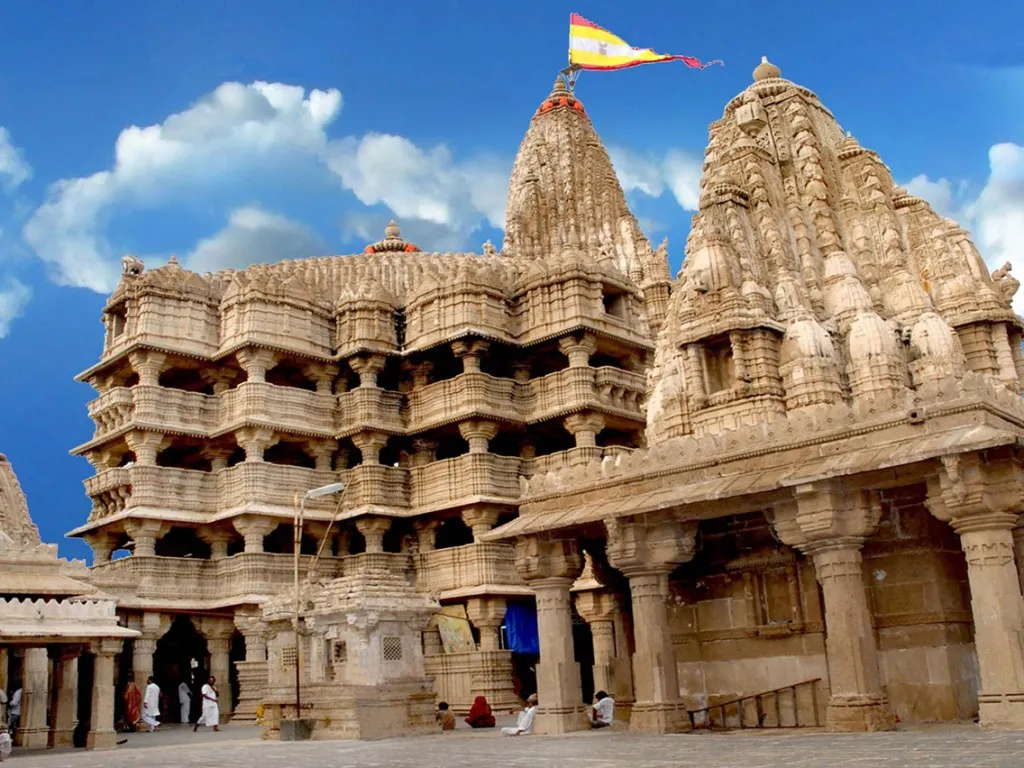
Dwarka is Krishna's legendary capital and a Char Dham seat. Celebrating Janmashtami here, at Dwarkadhish Temple, is one of Gujarat's most intense festival experiences. Expect decorations, continuous chanting, special aartis, and long queues through the night of Krishna's birth. If you prefer pleasant weather and smaller crowds, compare October–March travel instead. Janmashtami falls in August–September (Ashtami of Krishna Paksha in Bhadrapada) — confirm the exact date before booking.
Unlike a winter weekday darshan, Janmashtami turns the entire temple town into a living festival. Shopkeepers stay open late, bhajan groups move through lanes near Gomti Ghat, and even simple tea stalls do brisk business until after midnight. Budget extra for stays — not just higher room rates, but the practical cost of eating out more often because your group may not return to the hotel until 2 AM.
Midnight Darshan
The highlight of Janmashtami in Dwarka is the midnight celebration marking Krishna's birth. Expect extended rituals, continuous chanting, and the largest devotee turnout of the year. Check temple trust notices for the exact night schedule — crowds are extreme.
If this is your first Janmashtami here, plan to reach the temple precinct by early evening — not at 11 PM. Security lines, locker deposits, and shoe-handling alone can eat an hour when the lanes are packed shoulder to shoulder. Many families split duties: one person holds the queue spot while others rest at the hotel and return with water and prasad plates.
The atmosphere builds through bhajan sessions in the outer courtyard before the sanctum rhythm changes for the birth hour. You will hear conch shells, bells, and the crowd chanting in waves — emotionally powerful even if you cannot reach the innermost darshan line. Elders and small children often watch from the outer mandapa or Gomti-side lanes where screens and loudspeakers carry the ceremony.
Street vendors sell flowers, prasad plates, and small Krishna idols along the temple approach from afternoon onward. Prices rise 20–30% on festival night — carry small notes. Police and temple volunteers manage one-way flow near Swarga Dwar after 8 PM; follow their directions even if your group gets temporarily separated. I set a fixed meeting point at the hotel or a landmark near Gomti Ghat before entering the crowd.
Special Darshan & Temple Timings
- Extended / special ritual schedules — confirm on the notice board that week
- Midnight focus with huge devotee turnout from across India
- Longer security checks and locker lines — travel light; follow dress code
- Normal daily windows still matter around the festival; keep the darshan timings page open
- Street congestion near Gomti Ghat / temple approaches — walking stays beat parking hunts
Celebrations
Street processions, devotional singing and decorated tableaux move through lanes near Gomti Ghat and the temple during festival week. Parking near the temple becomes very difficult — walking is easier. Keep your group together and agree on a meeting point outside the temple in case someone gets separated.
Raas garba and cultural programmes run in community grounds and temple precincts through the week — timings vary by year. Local shops sell Krishna mukut, flutes, and decorative items for children. I avoid buying "VIP darshan" from street agents — only the official temple trust counter near Moksha Dwar handles authorised passes when they are offered. Food queues at popular thali places stretch 30–45 minutes on festival evening; eat before 5 PM or carry dry snacks.
Cradle Ceremony and Cultural Events
The cradle ceremony (jhulan utsav) and cultural programmes are central to Dwarka's Janmashtami celebrations. Decorations, bhajan sessions and special aartis fill the temple precinct and surrounding ghats. Janmashtami falls in the monsoon window — rain can disrupt outdoor events; carry a light rain jacket and prefer Sudarshan Setu if ferries pause in rough seas.
Accommodation During Janmashtami
Rooms within 500 metres of Jagat Mandir are the first to sell out — sometimes weeks ahead for Janmashtami. Dharamshalas run by community trusts may accept walk-ins but expect shared facilities and strict check-in times. If temple-side options are full, staying near Dwarka station still works; autos run through the night during the festival, though fares rise after midnight.
Janmashtami Booking Timeline
I follow this schedule when I help families plan Janmashtami in Dwarka. Start earlier if you are coming from Mumbai or Delhi with multiple travellers.
| When to book | What to secure | Typical cost range | My tip |
|---|---|---|---|
| 8 weeks before | Train tickets (Ahmedabad/Mumbai/Delhi routes) | Sleeper ₹700–₹1,400 | Book Tatkal backup dates if waitlisted |
| 6 weeks before | Temple-side hotel or dharamshala | ₹1,500–₹4,000/night (festival surge) | Choose cancellable booking first |
| 4 weeks before | Air tickets if flying to Jamnagar/Rajkot | ₹3,000–₹8,000 one way | Pre-book airport taxi to Dwarka |
| 2 weeks before | Day taxi for post-festival Bet Dwarka day | ₹1,800–₹2,800 (festival surcharge possible) | Confirm Sudarshan Setu route with driver |
| 1 week before | Return train / flight; reconfirm hotel | — | Call hotel — online listings go stale |
| Festival day (Day 0) | Arrive by afternoon; rest before evening | Auto ₹50–₹150 night surge | Do not schedule Bet Dwarka same night |
Trains & buses
Book Ahmedabad and Mumbai routes weeks ahead. Waitlists clear slowly around the festival.
Hotels
Temple-side rooms sell out and prices spike. Use the stay guide and reserve cancellable options early.
Food
Eat early; popular thali places queue heavily. See what to eat in Dwarka.
Taxis
Pre-agree day-hire rates; festival surcharges are common. Don’t rely on last-minute airport pickups without confirmation.
Travel Tips for Janmashtami
- Keep children and elders inside the group; crowds surge near gates at midnight.
- Waterproof pouch for locker tokens and IDs; power bank stays at the hotel.
- Save police / 108 / hospital numbers offline.
- At least 2 nights in Dwarka: arrive a day early, experience the main night, buffer morning for darshan.
- Day 0 — check in within walking distance; festival day — rest in afternoon, do not over-schedule Bet Dwarka the same peak night.
- Next morning — quieter follow-up darshan, then Nageshwar / Bet Dwarka when crowds ease.
Janmashtami is not the week to squeeze Bet Dwarka, Somnath, and Gir into one schedule. Pick Dwarka deeply — temple nights, Gomti Ghat walks, and maybe one outer circuit after the main festival day. Monsoon rain can make the temple lanes slippery; wear footwear with grip, not smooth sandals.
My recommended 3-day Janmashtami plan: Day minus 1 — arrive, check in near temple, evening walk at Gomti Ghat. Day 0 (Janmashtami) — rest in afternoon, reach temple precinct by 5 PM, midnight celebration, return after 1 AM. Day plus 1 — quieter morning darshan, then Nageshwar and Bet Dwarka via Sudarshan Setu when crowds ease. Budget ₹3,000–₹6,000 per person for the 3 nights including festival-surged hotel rates.
Pack light for the midnight queue — locker space is limited and lines are long. Carry only essentials: ID copy, small cash for prasad, a water bottle (empty before locker), and a light rain layer. Leave phones and bags at the hotel when possible; use the official locker only if you must carry valuables. Autos after midnight charge 2–3× normal fare — agree the rate before boarding or walk if your hotel is within 1 km.
| Factor | Janmashtami | Oct–Mar winter |
|---|---|---|
| Spiritual intensity | Highest | High but calmer |
| Weather | Monsoon / humid | Pleasant |
| Crowds & prices | Extreme | Busy but manageable mid-week |
| Bet Dwarka ferry | May pause — use Setu | Usually reliable |
Dwarka during Janmashtami week feels like a different city. Sound systems play bhajans from shop fronts, children wear Krishna mukut in the lanes, and the Gomti Ghat side glows with decorative lights after dark. Police manage traffic one-way near the temple — expect autos to refuse short trips or quote double. I tell families to walk whenever the hotel is within 15 minutes on foot. Prasad shops near Swarga Dwar stay open until 2 AM on festival night; milk sweets and fruit plates sell fast — buy before 8 PM if you want choice. If elders cannot stand through midnight, the outer mandapa and Gomti-side broadcast carry the ceremony adequately. Next morning darshan on Day plus 1 is often the most peaceful of the whole trip.
Online darshan streams sometimes run during Janmashtami for devotees who cannot reach the inner queue — useful for elders at the hotel, but most pilgrims still want at least one in-person darshan during the visit. Combine streamed viewing at the hotel with one manageable morning slot on Day plus 1 rather than forcing midnight inner-sanctum entry for fragile walkers.
Mobile networks degrade near midnight when lakhs of devices connect around the temple — do not rely on data for coordinating separated family members. Agree a physical meeting point (hotel name, Gomti Ghat step number, or a fixed shop sign) before entering the crowd. Police booths near Swarga Dwar can help with lost children — note the booth location on arrival day.
Hotel generators matter on Janmashtami night — power demand spikes when the whole town stays awake; ask if your property has backup before booking.
Temple annakshetra and community kitchens near Swarga Dwar serve free or donation-based meals on Janmashtami — lines are long but move steadily if you arrive before 11 AM. I tell groups to eat early and stash dry prasad for midnight rather than hunting food when every lane is packed. Milk-based sweets spoil quickly in August heat; buy fresh batches the same evening only.
Plan Your Dwarka Trip
Written by
Lead Editor & Pilgrimage Guide · Independent Dwarka travel guide
Last updated: August 2026
Frequently Asked Questions
Janmashtami FAQs
Dates, crowds, stays and Bet Dwarka in monsoon.
Janmashtami falls in August–September (Ashtami of Krishna Paksha in Bhadrapada). The exact date changes each year — confirm before booking.
Midnight celebrations and extended rituals are the highlight. Crowds are extreme — follow temple trust notices for the exact night schedule.
Yes, if you want a deeply spiritual experience. Book trains and stays weeks ahead, expect long queues, and use Sudarshan Setu if ferries pause in monsoon.
At least 2 nights. Arrive a day early, attend the main night programme, and keep the next morning free for a quieter follow-up darshan.
Usually yes, but rough monsoon seas can affect ferries. Use Sudarshan Setu and avoid stacking Bet Dwarka on the same night as the main temple if travelling with elders.
Among the heaviest of the year. Security checks, locker lines and street congestion near the temple all increase — travel light and stay within walking distance.
Planning Your Trip to Dwarka?
Darshan timings, how to get there, nearby temples, where to stay — we've put it all together so you can focus on the pilgrimage. Jai Dwarkadhish.