Table of Contents
- Marine Archaeology Findings
- Underwater Dwarka Remains
- Evidence of an Ancient Port
- Scientific Studies & Excavations
- Underwater Dwarka and the Mahabharata Tradition
- Can Tourists See Underwater Dwarka?
- Archaeology vs Pilgrimage
- Avoiding Misleading Tours
- Reading List Before You Go
- What Temple Priests Emphasise
- Conversation with Guides
- What Visitors Can Actually See
- Myth vs Marine Archaeology — Plain Language
- Museum and On-Shore Evidence
- Responsible Tourism Angle
- Reading for Deep Dive
- Dive vs Snorkel Marketing
- Local tip from our editor
- Common mistake
- Verify before you go
This guide covers marine archaeology and submerged-structure finds off Dwarka in detail; for overview see Dwarka guide.
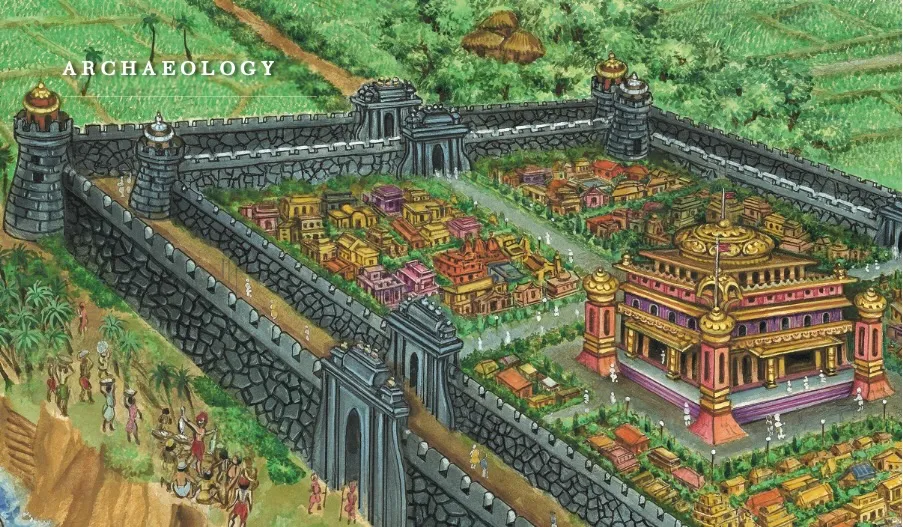
Few pilgrimage towns have a story as vivid as Dwarka beneath the waves — Krishna's golden city, said to have sunk after the Lord departed. Marine surveys off Gujarat's coast have found stone structures and artefacts that keep historians, devotees, and travel marketers talking. Here we separate faith, genuine research, and tourist hype so you leave informed, not sold a fantasy.
Marine Archaeology Findings
Over decades, divers and researchers from the Archaeological Survey of India and National Institute of Oceanography have reported submerged remains near Dwarka–Bet Dwarka waters — stone blocks, anchors, pottery fragments, structures at 20–40 metres depth.
Interpretations vary: ancient port works, later coastal structures, or possible links to legendary Dwarka. For serious reading, stick to peer-reviewed summaries and ASI notes — not social-media "final proof" videos.
Underwater Dwarka Remains
Submerged walls, pillars, and stone alignments have turned up in multiple survey campaigns. Some researchers say these match descriptions of a planned coastal city; others want more evidence before dating and attribution. The debate alone has put Dwarka on the global archaeological map.
No tourist boardwalk under the sea doesn't erase devotion or scientific curiosity. The remains live in academic literature even when you can't see them from shore.
Evidence of an Ancient Port
Several studies suggest Dwarka and Bet Dwarka were active maritime centres with harbour infrastructure. Ancient anchors, pier-like stone arrangements, and trade-related artefacts support the idea of a historic port on this coast. Gujarat's position on Indian Ocean trade routes makes a Krishna-era or post-Krishna port plausible in scholarly discussion.
Onshore excavations near the temple and coast have also yielded pottery and structural fragments from multiple historical layers, complementing underwater data.
Scientific Studies & Excavations
Expeditions since the 1960s–80s and continuing surveys have used sonar, diving teams, and sediment analysis. Publications in marine archaeology journals document specific finds while noting limitations of underwater excavation in tidal, silty conditions. Funding and access constraints mean not all sites have been fully excavated.
Visitors interested in the science should consult ASI publications, NIO reports, and reputable books on Indian marine archaeology rather than relying on dive-shop marketing.
Underwater Dwarka and the Mahabharata Tradition
Puranic narratives describe Dwarka's submergence after Krishna's departure — the Arabian Sea reclaiming Vishwakarma's golden city. For believers, the sea is witness to Krishna's era. For scholars, the Mahabharata and Harivamsa provide narrative context that archaeology may or may not corroborate.
Both frames coexist in Dwarka: devotees honour scripture at Jagat Mandir while researchers study stones beneath the waves. Neither requires dismissing the other.
Can Tourists See Underwater Dwarka?
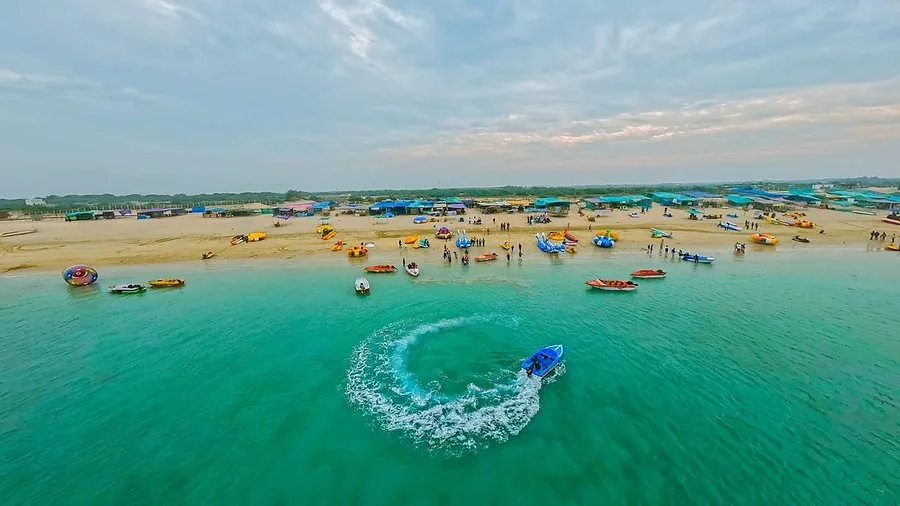
There is no standard walk-through underwater palace for general tourists. Optional guided scuba at Shivrajpur shows marine life — not guaranteed ruin tours. Concepts like submarine tourism have been discussed in news but do not assume public tickets exist on your travel dates.
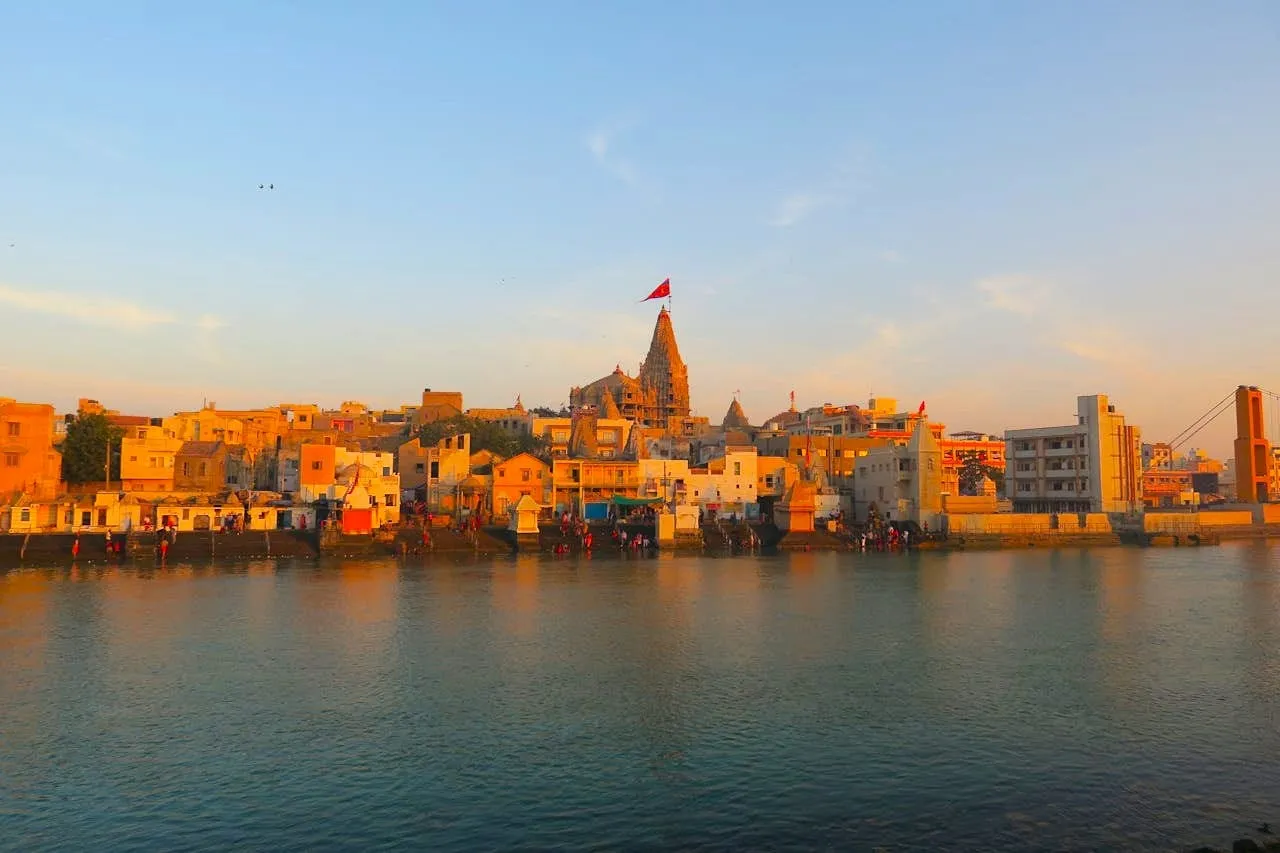
What you can do: walk Gomti Ghat with the story in mind, visit Bet Dwarka, read museum panels, attend aarti. Be wary of claims like "see Krishna's palace underwater today" or unlicensed "ASI special access" tours. The living temples above water are still the heart of the pilgrimage.
Archaeology vs Pilgrimage
Marine surveys off Dwarka have reported stone structures and artefacts that fuel legitimate scholarly debate about ancient coastal settlements — distinct from the Puranic account of Krishna's submerged capital. ASI and academic teams work under permits; there is no regular tourist dive trail through those zones. Pilgrims still find meaning walking Gomti Ghat and Bet Dwarka with the scripture in mind while accepting that the "lost city" is largely underwater history, not a ticketed attraction.
Avoiding Misleading Tours
Be sceptical of operators promising guaranteed views of palace walls or "ASI special access" without verifiable credentials. Museums and temple guides offer safer context. Optional scuba at Shivrajpur is for marine recreation — not guaranteed ruin sightseeing.
Reading List Before You Go
Academic papers and ASI summaries online explain marine survey methods better than street folklore — skim one before Gomti snan if the archaeology angle interests you. Temple priests focus on living worship, not dive maps.
What Temple Priests Emphasise
Living darshan at Jagat Mandir remains the pilgrimage centre regardless of marine archaeology headlines — guides at the ghat may tell submerged-city stories, but official temple discourse focuses on Krishna's presence in the current shrine. Treat underwater narratives as faith-plus-scholarship context, not as a substitute for darshan discipline or ASI-verified site visits elsewhere on the coast.
Conversation with Guides
Licensed guides vary in how much they emphasise archaeology versus bhakti — ask upfront if you want ASI-cited facts or devotional narrative. Neither is wrong for tourism, but mixing them without labels creates false expectations about what you will literally see under water or on shore.
What Visitors Can Actually See
Submerged structures at 20–40 m depth are for divers and researchers — not visible from ghats or ferries. Onshore, Bet Dwarka excavations and museum-style displays interpret finds. Manage expectations: a standard pilgrimage will not include underwater archaeology unless you book scuba separately. Read ASI/NIO survey summaries online before visiting if the science angle matters to your trip.
Pilgrims often conflate legend with visible proof — manage expectations before booking scuba. Bet Dwarka onshore excavations are the most accessible archaeology link on a standard yatra. NIO publications describe depth and dating debates honestly.
Local boat operators sometimes mention submerged cities — treat casual claims skeptically and rely on documented ASI/NIO work. Bet Dwarka pottery displays are the honest onshore link for archaeology-curious pilgrims.
For overview see Dwarka. National Institute of Oceanography surveys through the 2000s mapped stone blocks, anchors, and pottery off Dwarka coast — evidence of a busy historic port, not a single drowned palace you can snorkel to.
Myth vs Marine Archaeology — Plain Language
Scripture describes Krishna's capital swallowed by sea; divers find cultural layers spanning centuries. I hold both: faith at Dwarkadhish, curiosity at the marine museum displays. Tourist boats marketing "underwater city" dives oversell — read operator fine print.
Museum and On-Shore Evidence
On-shore excavations near Gomti and old city walls complement underwater finds — pottery shards and structural stones displayed locally. Ask at temple information counters for current exhibition access. Faith narrative and archaeology coexist without needing to "prove" every legend literally.
Responsible Tourism Angle
Do not buy "ancient" coins from beach hawkers — often replicas. Support licensed museums and official dive operators who fund documentation. Faith and science both deserve honesty.
Reading for Deep Dive
NIOT publications and BBC Gujarat coast documentaries supplement on-ground museum plaques — worth one evening before dive day.
Dive vs Snorkel Marketing
Snorkel trips ₹1,500–₹3,000 show fish not lost palaces — operators should say so upfront.
Local tip from our editor
This topic makes more sense if you pair it with a museum visit or an informed local guide rather than expecting a visible lost city from the shoreline. Treat the article as context for Dwarka's layered history, not as a promise of a tourist site you can simply walk to.
Common mistake
Readers sometimes confuse archaeological interpretation with a ready-made sightseeing attraction and arrive expecting direct public access to underwater remains.
Verify before you go
Check whether any local museum, exhibit, or guided talk is open if you want real on-ground context beyond the article.
Plan Your Dwarka Trip
Written by
Lead Editor & Pilgrimage Guide · Independent Dwarka travel guide
Last updated: August 7, 2026
We verify temple timings, routes, and fares against notice boards and recent pilgrim reports. See our editorial policy.