Sacred City on the Arabian Sea
Dwarka — Travel & Pilgrimage Guide
Krishna’s legendary capital in Gujarat — a Char Dham pilgrimage town where temple bells, Gomti Ghat rituals and sea breeze meet. Plan darshan, day trips and stays with this practical guide.
On this page
What Is Dwarka and Why Pilgrims Visit
Dwarka is one of India’s most lived-in pilgrimage cities: small enough to walk in parts, busy enough to feel full from dawn onward, and centred around the practical question every pilgrim asks first — which gate and which queue today? According to Hindu tradition, this was the capital of Lord Krishna. Today it functions as the main base for darshan, market errands, station arrivals, and short outer-circuit trips across Devbhumi Dwarka district.
The name comes from Sanskrit dwar — a gate or doorway — and the city still feels like an arrival point in that sense. Step out of DWK station and the first useful thing to know is simple: ignore the initial rush of loud fare calls, move a little beyond the exit, and confirm whether you want a station-side hotel drop or a temple-side ride before you sit in any auto. That first ten minutes shapes the tone of the whole visit more than most guides admit.
Practically speaking, Dwarka works best as a two-day city base. The main temple, Gomti Ghat and market lanes stay close to your core walking zone; Bet Dwarka and Nageshwar make sense as a separate outing. If you are building a longer Gujarat circuit, Dwarka pairs naturally with Somnath — we have a dedicated Dwarka–Somnath itinerary and a reverse route guide for Somnath to Dwarka.
Dwarka History and Krishna Connection
Dwarka appears in the Mahabharata, Harivamsa, Bhagavata Purana and related traditions as Krishna’s capital. Tradition says Vishwakarma built it by the sea and that the old city later went under the waters. That story matters here, but on this page I keep the focus on the living city itself; for scriptural background see our About Devbhumi Dwarka page.
Marine surveys off the Dwarka–Okha coast have documented submerged stone walls, anchors and pottery at varying depths. Scholars debate dating and interpretation, and that debate is healthy. What matters for a visitor is the layered feeling of the place: scriptural memory, medieval temple architecture, and a modern town that still wakes up for Mangal Aarti.
In the eighth century, Adi Shankaracharya organised the four Char Dham seats — Badrinath, Puri, Rameswaram and Dwarka. That framework still guides millions of Hindu travellers. Dwarka is also counted among the Sapta Puri, the seven cities traditionally associated with liberation. Whether you come as a lifelong devotee or a first-time visitor, those frameworks explain why queues form before sunrise and why elders often insist on at least one full darshan day with no other plans.
Medieval and later rulers of Gujarat — including the Chalukyas and regional kingdoms — patronised the Jagat Mandir complex you see today. Earthquake damage and reconstructions over centuries mean the stones under your feet span many eras, not one clean historical layer. That continuity matters: Dwarka is not a museum piece frozen in time. It is a working shrine where renovation, daily puja, and festival decoration happen in the same breath as archaeological debate about the submerged city offshore.
For pilgrims tracing Krishna’s life geographically, Dwarka sits at the western end of a mental map that often includes Mathura and Vrindavan in the north, and pilgrimage stories that link the coast with inland Gujarat. You do not need to master every Puranic reference to feel the place — but knowing that locals treat the temple as a living kingdom of Krishna, not merely a monument, helps explain the reverence in queue behaviour, the flag ceremony, and the insistence on modest dress at the gate.
Devbhumi Dwarka District Explained
Devbhumi Dwarka — also spelled Devbhoomi Dwarka — literally means the Land of the Gods at Dwarka. In everyday speech, pilgrims use the phrase for the holy city of Krishna and for the wider coastal landscape around it. Spellings vary in English — Devbhumi, Devbhoomi, Dev Bhumi — but the Gujarati and Hindi sense stays the same.
Administratively, Devbhumi Dwarka is a district in western Gujarat on the far edge of the Kathiawar peninsula. For travellers, the practical centres are Dwarka town, Okha (ferry hub for Bet Dwarka), Khambhalia, Bet Dwarka island, and the coastal belt running through beaches, shrines and port traffic. Hotel searches often use "Dwarka," while government notices say "Devbhumi Dwarka" — both point to the same sacred coastline, but not the same scale.
Dwarka city is where you sleep, queue, walk to the main temple, and solve real visitor problems like lockers, autos, and meal timing. Devbhumi Dwarka district is the wider frame that includes Okha, Khambhalia, Bet Dwarka, the coastal belt, and the administrative identity you see in maps. Road links connect the district to Jamnagar, Porbandar, Rajkot and onward to Ahmedabad and Mumbai — see our how to reach and distance chart for realistic timing.
The Classic Devbhumi Dwarka Pilgrimage Circuit
A well-paced pilgrimage usually covers five anchors. First, Dwarkadhish Temple for main darshan and aarti. Second, Gomti Ghat for riverside calm. Third, Rukmini Temple. Fourth, Nageshwar Jyotirlinga. Fifth, Bet Dwarka, reached by ferry from Okha Jetty or via Sudarshan Setu. See our Bet Dwarka ferry guide for boat timings and prices.
| Stop | Why it matters | Typical timing |
|---|---|---|
| Dwarkadhish Temple | Char Dham heart of Devbhumi | Morning + evening aarti |
| Gomti Ghat | Ritual riverside & sangam | After darshan / sunset |
| Rukmini Temple | Beloved Krishna–Rukmini legend | 1–2 hours from town |
| Nageshwar | Jyotirlinga on the circuit | Combine with Bet Dwarka |
| Bet Dwarka | Island associated with Krishna’s stay | Half-day including travel |
Most groups finish the core in two days. Day one stays near town; day two runs the Nageshwar–Bet Dwarka loop by taxi. If you have a third day, add Shivrajpur Beach, Gopi Talav, Porbandar or a slower second darshan. Confirm temple windows on our darshan timings page.
Station Exit Tips, Hotel Areas & the Temple Market
DWK station is close to town, but it does not always feel organized when a train empties at once. If you have elders, get them to one side before negotiating. Ask directly for temple side, Gomti side, or station side, because "Dwarka hotel" is too vague and drivers will assume the zone that suits their route. I also prefer keeping one screenshot of the hotel pin offline because mobile signal and family coordination are not always smooth in that first rush.
Temple-lane hotels suit pilgrims who want to walk to darshan, hear the aarti atmosphere, and return easily after evening prayers. Station-side hotels are calmer for arrivals, departures, and budget overnights, especially if you reach late or leave early, but they feel less devotional and usually add an auto ride for the main temple.
Near Dwarkadhish, the local market is part of the city experience, not just a shopping errand. The lanes around the temple are where pilgrims buy prasad, coconuts, small idols, dupattas, dry snacks for the return train, and the last shawl someone forgot to pack. I would not call it a polished souvenir district; it is more useful than pretty, and that is exactly why it helps first-time visitors understand how Dwarka actually works.
Dwarkadhish Temple Darshan Tips
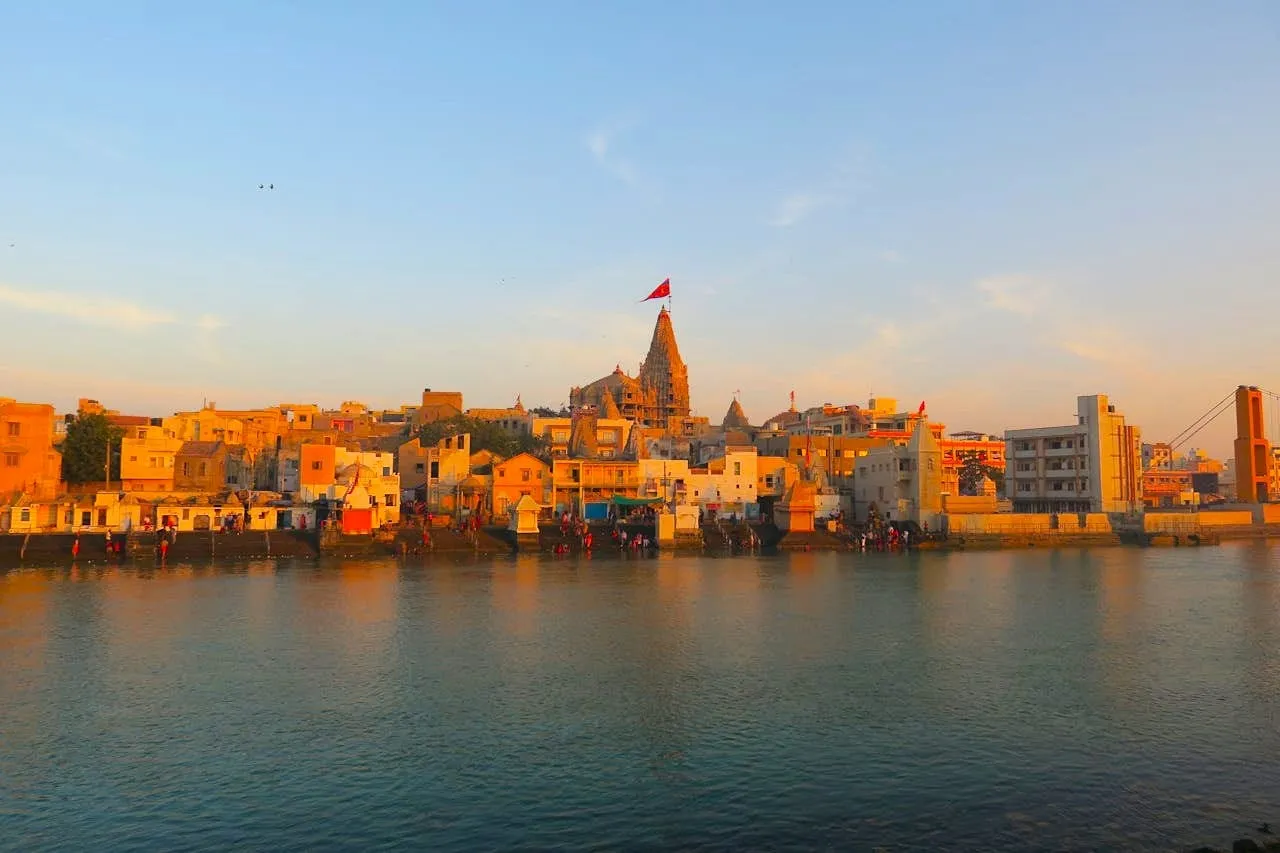
The Dwarkadhish Temple, also called Jagat Mandir, is the spiritual centre of Dwarka. The five-storeyed limestone shrine rises above the old town with carved pillars, a tall shikhara and the famous flag that is changed several times a day. Inside, Krishna is worshipped as Dwarkadhish — the King of Dwarka. Photography is not allowed in the sanctum; free lockers near the entrance hold phones and bags, so travel light and keep locker tokens safe.
Daily life around the temple follows a clear rhythm: Mangal Aarti in the early morning, Shringar and Rajbhog through the day, an afternoon break when the sanctum closes, then Sandhya and Shayan Aarti in the evening. Exact windows can shift on festival days, so keep our darshan timings guide handy and confirm locally on arrival. Modest dress is expected — see the Dwarka dress code before you pack.
Tip from regular visitors: arrive for the first morning window if you dislike dense crowds, or use the late evening aarti if you prefer cooler air and a softer light on the temple exterior. Midday queues can feel long in summer. If you are travelling with elders, hire a local wheelchair or take frequent rests in shaded lanes rather than standing in the open sun.
The five daily aartis — Mangal, Shringar, Rajbhog, Sandhya and Shayan — each change the deity’s adornment and the mood of the Sabha Mandap. Mangal at 6:30 AM draws the most disciplined devotees; Sandhya at 5:00 PM is cooler and photogenic on the exterior shikhara. Rajbhog marks the midday offering before the afternoon closure. If you miss inner sanctum darshan during peak hours, standing respectfully in the outer mandapa during aarti still feels meaningful — many families plan exactly that when travelling with toddlers who cannot wait in long lines.
Paid priority darshan passes appear during heavy seasons — enquire at Moksha Dwar counters on arrival. General darshan remains free; the pass only buys queue efficiency, not spiritual rank. See full timing tables on our dedicated Dwarkadhish Temple guide and darshan timings page.
Top Temples and Places in Dwarka
Beyond the main temple, Dwarka’s sacred geography is easy to explore in short hops. Start with our full places to visit list, then prioritise the stops below.
Bet Dwarka
Island associated with Krishna’s residence. Reach by ferry or via Sudarshan Setu. Full guide: Bet Dwarka.
Nageshwar Jyotirlinga
One of the twelve Jyotirlingas, usually combined with Bet Dwarka on the same taxi loop. See Nageshwar.
Gomti Ghat & Rukmini Temple
Ritual bathing at Gomti Ghat; the Rukmini Devi Temple sits a short drive from town.
Beaches & lighthouse
Shivrajpur Beach is a Blue Flag stretch. Dwarka Lighthouse is popular for sunset views.
Other worthwhile stops include Gopi Talav, ISKCON Temple Dwarka, Bhadkeshwar Mahadev and the market lanes for prasad boxes. Day trips to Porbandar or Gir National Park work if you have extra days beyond the core circuit.
How to Reach Dwarka
Most pilgrims arrive by train. Dwarka Railway Station sits close to the temple area. For flights, land at Jamnagar and continue by taxi or bus — typically two and a half to three hours. See our dedicated Jamnagar to Dwarka guide for airport transfers.
- Full transport breakdown: How to reach Dwarka
- Popular routes: Ahmedabad, Mumbai, Rajkot, Jamnagar, Delhi, Vadodara, Surat
- City-to-city distances: Distance to Dwarka
- Okha side hop: Okha to Nageshwar
Western Railway connects Dwarka (DWK) and Okha with Ahmedabad, Rajkot, Mumbai and other Gujarat cities. Common services include overnight trains on the Saurashtra corridor — verify exact names and times on IRCTC before booking (examples often cited: 22945 Saurashtra Mail, 19567 Okha Passenger). Winter weekends and Janmashtami fill quickly; book 2–4 weeks ahead for sleeper class, earlier for AC.
From DWK station, autos to the temple belt typically cost ₹30–₹80 depending on distance and time of day. Prepaid counters exist at some hours; late-night arrivals after Shayan Aarti may need negotiated fares. Okha station suits pilgrims who want Bet Dwarka first — budget an extra ₹600–₹800 for a taxi to Dwarka town if you terminate there instead of DWK.
Book trains early around Janmashtami, Kartik Purnima and long weekends. Auto-rickshaws cover short hops in town; for Bet Dwarka and Nageshwar, a full-day taxi (₹1,500–₹2,500) is usually simpler than stitching multiple shared rides.
Best Time to Visit Dwarka
The most comfortable window is October to March: cooler mornings, softer afternoons and better walking weather between temples. April to June can be intensely hot — schedule outdoor movement early and late. July to September brings monsoon humidity; ferries may pause in rough seas, but Sudarshan Setu keeps Bet Dwarka accessible by road for most travellers.
Festival timing is a separate decision. Janmashtami in Dwarka and Kartik Purnima draw large crowds. For seasonal planning, see best time to visit and live conditions on Dwarka weather.
2-Day Dwarka Itinerary
Day 1: Early darshan at Dwarkadhish Temple, rest and breakfast near the temple, visit Gomti Ghat, then Rukmini Temple in the late morning or after the temple’s afternoon break. Evening aarti if energy allows.
Day 2: Taxi loop to Nageshwar Jyotirlinga and Bet Dwarka (via Sudarshan Setu or Okha ferry), return by afternoon, optional lighthouse or market stroll before your train. Adjust pace with our itinerary planner if you have only one day or three.
One-day visitors should not try to “complete” everything. Prioritise main temple darshan first, then either Bet Dwarka or Nageshwar — not both in a breathless rush. Families with young children often do better with a half-day rest after lunch instead of stacking more temples.
| Time | Day 1 — Dwarka town | Day 2 — Outer circuit |
|---|---|---|
| 5:30–6:00 AM | Walk to Dwarkadhish for Mangal Aarti queue | Optional second Mangal Aarti or early breakfast |
| 8:00–11:00 AM | Main darshan, Gomti Ghat dip, Sudama Setu walk | Taxi to Nageshwar (~45 min from town) |
| 12:00–4:00 PM | Lunch during temple closure; Rukmini Temple | Bet Dwarka via Setu or Okha ferry; island darshan |
| 5:00–8:30 PM | Sandhya Aarti, market stroll, early dinner | Return to Dwarka; evening aarti if not exhausted |
Full-day taxi hire for Day 2 typically runs ₹1,500–₹2,500 for Nageshwar, Gopi Talav and Bet Dwarka. Monsoon travellers should confirm ferry status at Okha or default to Sudarshan Setu — see our Bet Dwarka ferry guide. If elders tire easily, skip lighthouse or Shivrajpur on Day 2 and keep the loop to two shrines only.
Dwarka Trip Budget (Indicative)
Dwarka is not an expensive destination by Indian metro standards, but festival weeks and winter weekends push up stays and autos. The table below is for planning — not a price guarantee. Always confirm locally.
| Category | Budget pilgrim | Mid-range family |
|---|---|---|
| Stay (per night) | Dharamshala ₹200–₹800 | Hotel near temple ₹1,200–₹3,500 |
| Food (per day) | ₹200–₹400 (thali / mess) | ₹500–₹800 (hotel dining) |
| Local autos | ₹30–₹80 short hops | ₹100–₹200 temple–station |
| Day taxi (outer circuit) | Shared / negotiate ₹800–₹1,200 | Private ₹1,500–₹2,500 |
| Bet Dwarka ferry | ~₹20–₹50 return (when running) | Setu road — fuel/taxi only |
| 2-day total (excl. travel) | ₹2,500–₹4,500 per person | ₹5,000–₹9,000 per person |
Train fares from Ahmedabad or Mumbai vary by class and season — see our Ahmedabad and Mumbai route guides. Jamnagar flyers should budget ₹2,500–₹4,000 for a one-way taxi to Dwarka town. Janmashtami and Kartik Purnima can double hotel rates near the temple — book early.
Where to Stay and Eat in Dwarka
Staying within walking distance of the temple saves time during early aarti and late returns. Options range from simple dharamshalas to mid-range hotels; book ahead in winter and festival weeks. Compare styles in our hotels and dharamshala guide.
Food in Dwarka is almost entirely vegetarian — Gujarati thalis, Kathiyawadi meals, farsan and milk sweets. Use the temple’s afternoon closure for a proper lunch. See what to eat in Dwarka for costs and hygiene notes. Carry sealed water in summer queues.
Dwarka Festivals
Janmashtami is the biggest night of the year: midnight celebrations, decorated lanes and extreme crowds. Kartik Purnima and other Vaishnava observances also draw large gatherings. On ordinary days the temple still feels festive because aartis, flag ceremonies and continuous chanting never really stop. If your dates are flexible, choose winter weekdays for a gentler first visit, then return for a festival later when you already know the layout of lockers, ghats and taxi stands.
During major festivals, hotels near the temple sell out early and taxi rates rise. Keep a cancellable booking if possible, eat early, and avoid stacking Bet Dwarka on the same peak night as midnight temple programmes.
Local Transport and Shopping
Inside Dwarka town, auto-rickshaws cover short hops between the station, temple approaches, Gomti Ghat and nearby hotels. Agree on a fare before you sit down, especially late at night after Shayan Aarti. For the Nageshwar and Bet Dwarka circuit, a full-day taxi is usually cleaner than piecing together shared vehicles with elders and luggage.
Shopping stays simple: prasad boxes, incense, small idols, garments and Gujarati snacks for the journey home. Busy lanes near the temple are convenient after darshan, but keep receipts and avoid leaving bags unattended while bargaining.
First-Time Visitor Checklist
If this is your first Char Dham stop, treat Dwarka as a learning curve rather than a photo destination. Phones stay outside the sanctum, so the experience is meant to be felt, not filmed. Learn a few practical phrases for rickshaw bargaining, keep small change for locker tips and prasad, and decide your group’s meeting point before entering crowded gates.
- Follow modest clothing rules; see the dress code.
- Save emergency helplines offline.
- Read our travel tips for packing and queue etiquette.
- Confirm ferry and bridge plans the same morning if monsoon swell is high.
- Do not leave phones or jewellery unattended while bathing at ghats.
Many visitors combine spiritual stops with coastal curiosity — temple architecture, sunsets, and the story of underwater Dwarka. Stand at the sangam where Gomti meets the sea, and you will understand why generations return. For deeper reading, browse our Dwarka blog.
Dwarka with Elders and Children
Dwarka rewards slow pacing when travelling with seniors or small children. Choose a temple-side stay within a 5–10 minute walk so locker queues and early gates do not exhaust the group before darshan begins. Avoid stacking Bet Dwarka and Nageshwar on the same day as a long train arrival — rest first, then hire a taxi with a patient driver who knows where cars can actually stop near narrow lanes.
Wheelchair users should expect steps at the main sanctum and uneven ghat stones after rain. Ask temple volunteers for help during Sandhya Aarti rather than midday heat. For kids, carry snacks and a change of clothes if you plan Gomti Ghat — wet clothing before temple entry creates friction at the gate. My rule for families: one major temple block per half-day, not three rushed stops.
| Origin | Distance | Typical mode | Best for |
|---|---|---|---|
| Jamnagar (JGA) | 137 km | Taxi 2.5–3 hrs | Flyers, same-day darshan |
| Rajkot | 225 km | Train / road 4–5 hrs | Saurashtra day trips |
| Ahmedabad | 440 km | Overnight train ~9–10 hrs | Gujarat pilgrims |
| Mumbai | 950 km | Train or fly+road | Long-distance yatras |
Plan Your Dwarka Trip
Written by
Lead Editor & Pilgrimage Guide · Independent Dwarka travel guide
Last updated: August 2026
We verify temple timings, routes, and fares against notice boards and recent pilgrim reports. See our editorial policy.
Frequently Asked Questions
Dwarka FAQs
Location, Devbhumi meaning, best time, days needed, safety and how to reach.
Dwarka is a coastal pilgrimage city in Devbhumi Dwarka district, Gujarat, on the western tip of the Kathiawar peninsula beside the Arabian Sea. It is about 130 km from Jamnagar and roughly 450 km from Ahmedabad by road.
Dwarka is famous as Lord Krishna’s legendary capital, one of the four Char Dham pilgrimage sites, and home to the Dwarkadhish Temple (Jagat Mandir). It is also linked with underwater archaeology and the Sapta Puri tradition.
Devbhumi (also spelled Devbhoomi) means “Land of the Gods.” It refers both to the sacred city of Dwarka and to the modern Gujarat district that includes Dwarka, Okha, Bet Dwarka and nearby coastal towns.
Both usages exist. Pilgrims often say Devbhumi Dwarka for the holy city itself. Administratively, Devbhumi Dwarka is a district of Gujarat with Dwarka as a major pilgrimage centre within it.
Dwarka usually means the temple town where most pilgrims stay. Devbhumi Dwarka is the wider sacred and administrative region that also covers Okha, Bet Dwarka island, coastal beaches and surrounding villages.
Most pilgrims plan 2 full days: one for Dwarkadhish Temple, Gomti Ghat and Rukmini Temple, and another for Bet Dwarka and Nageshwar Jyotirlinga. Add a third day if you want Shivrajpur Beach or a relaxed pace with elders.
October to March offers pleasant weather and comfortable temple queues. Summers are hot; monsoon (July–September) is humid and can affect ferries, though Sudarshan Setu keeps Bet Dwarka reachable by road.
Yes. Dwarka is a busy pilgrimage town with police presence near the temple. Use common sense with valuables, keep emergency numbers saved, and prefer well-lit routes after late aarti.
Trains to Dwarka Railway Station are the most popular option. Buses and private taxis also run from Ahmedabad and Mumbai. The nearest major airport is Jamnagar, followed by a road transfer of about 2.5–3 hours.
Core circuit: Dwarkadhish Temple, Gomti Ghat, Rukmini Temple, Nageshwar Jyotirlinga and Bet Dwarka. Optional: Shivrajpur Beach, lighthouse, Gopi Talav and a Somnath extension.
Planning Your Trip to Dwarka?
Darshan timings, how to get there, nearby temples, where to stay — we've put it all together so you can focus on the pilgrimage. Jai Dwarkadhish.