Pilgrim Guide
Dwarka Travel Tips for Pilgrims
Dress code, darshan timings, daily budget, food, where to stay, photography rules, and safety advice for a first visit to Devbhumi Dwarka.
Before You Go
Quick Navigation (Table of Contents)
A bit of planning helps your Dwarka darshan go smoothly. Dwarka is a traditional pilgrimage town, and following local customs — from the dress code at Dwarkadhish Temple to the strictly vegetarian food scene — is part of the visit.
What to Pack for a Dwarka Trip
Pack light, modest clothing suitable for temple visits — cotton kurtas, sarees or salwar kameez are ideal. Carry a light shawl or jacket for winter mornings (December–February) and a compact umbrella or raincoat if visiting during monsoon. Comfortable walking shoes with good grip are essential for the Gomti Ghat steps and sandy paths around Bet Dwarka.
Other essentials include sunscreen (SPF 50+), sunglasses, a refillable water bottle, basic toiletries, any personal medications, and a small waterproof pouch for your phone and wallet during ferry crossings. Carry a photocopy of your ID (Aadhaar or passport) separately from the original. A portable power bank is useful as charging points are limited at dharamshalas and during transit.
| Category | Essential items | Optional but useful | Approx. cost if buying locally |
|---|---|---|---|
| Temple wear | Cotton kurta/saree, dupatta, modest footwear | Spare set, angavastra for men | Dhoti rental ₹20–₹50 near temple |
| Documents | Aadhaar/passport copy, train tickets, hotel confirmation | Printed darshan timing notes | — |
| Health | Personal meds, ORS, hand sanitiser | Basic digestive tablets, band-aids | Pharmacy items ₹50–₹200 |
| Summer (Apr–Jun) | Hat, SPF 50+, 2L water bottle | Electrolyte sachets, cooling towel | Sunscreen ₹150–₹400 |
| Monsoon (Jun–Sep) | Rain jacket, zip pouch for IDs | Quick-dry footwear, spare cotton set | Poncho ₹50–₹150 |
| Winter (Oct–Mar) | Light shawl/jacket, socks for stone floors | Closed sandals with grip for Gomti Ghat | Shawl ₹100–₹300 |
| Day-trip circuit | Dry snacks, sealed water, small cash | Bananas, biscuits for Bet Dwarka island | Snacks ₹40–₹150 |
At the Temple
Modest, traditional clothing is mandatory at the Dwarkadhish Temple and all other temples in Dwarka. Shorts, sleeveless tops, mini-skirts and revealing attire are not permitted inside temple premises. Men are expected to remove their upper garments before entering the sanctum at Jagat Mandir. Remove footwear before entering any temple — shoe stalls near entrances charge a small fee (₹5–₹10).
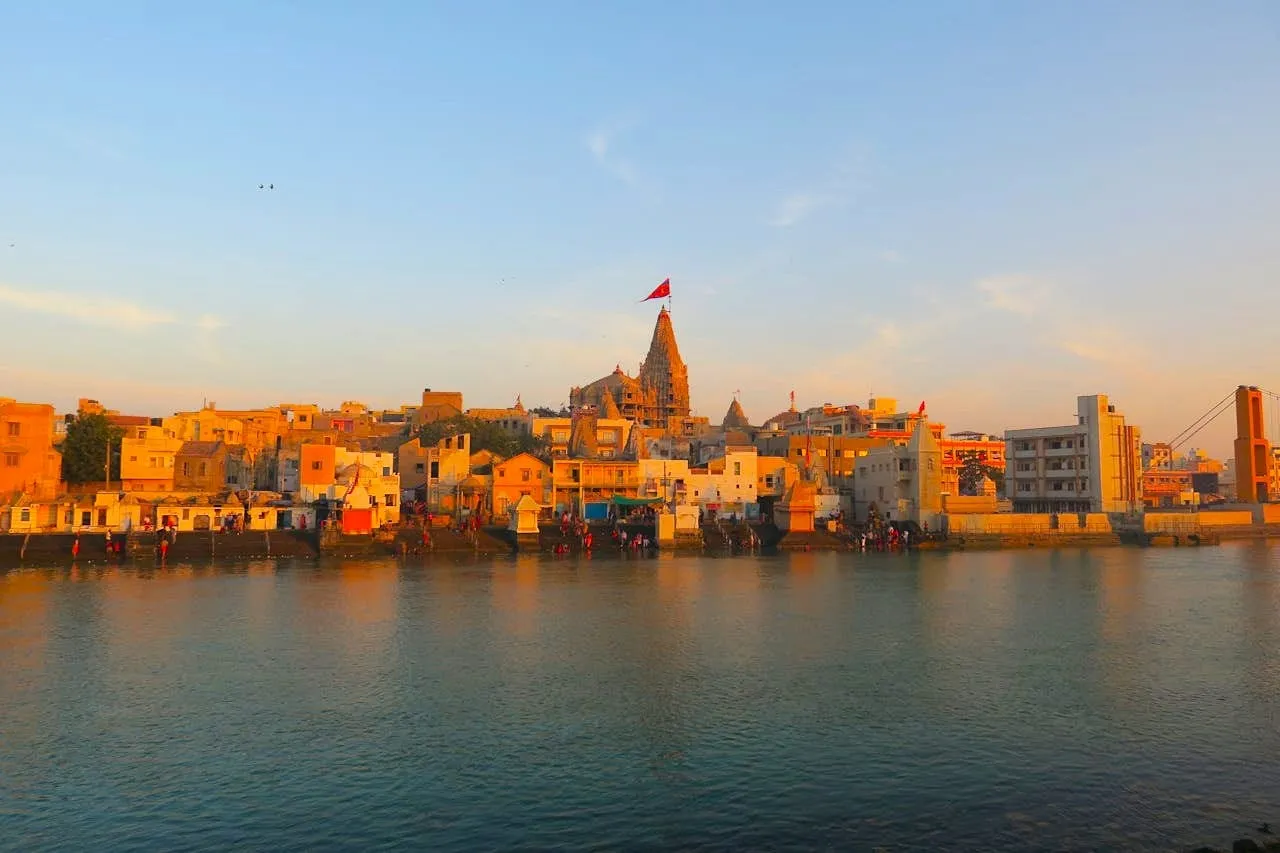
Photography is strictly prohibited inside the main shrine of the Dwarkadhish Temple. Mobile phones, cameras, smartwatches, leather belts and bags must be deposited in official lockers near the entrance before joining the darshan queue. You may photograph the temple exterior, the shikhara, Gomti Ghat, Sudama Setu and the coastal views. Always ask permission before photographing priests, sadhus or local devotees. Drone photography is not permitted anywhere near the temple complex.
Money and ATMs
Dwarka has several ATMs (SBI, Bank of Baroda, HDFC) clustered around the main market and near the railway station. However, ATMs can occasionally run out of cash during peak season — carry some cash (₹2,000–₹3,000) as backup for small offerings, auto-rickshaws and shoe stalls. UPI payments (Google Pay, PhonePe, Paytm) are widely accepted at restaurants, hotels and even some auto-rickshaw drivers.
A budget Dwarka trip (excluding travel to Dwarka) costs around ₹1,500–₹2,500 per person per day, covering stay and food. Full-day local sightseeing taxis cost ₹1,500–₹2,500. No entry fee is charged at the Dwarkadhish Temple; special aarti and darshan passes have nominal charges. Credit cards are accepted at mid-range and premium hotels but not at dharamshalas or smaller eateries.
I withdraw ₹3,000 at the start of a Dwarka weekend and treat it as my float for four days — lockers, shoe stalls, auto hops, prasad, and chai between darshan sessions. SBI and Bank of Baroda ATMs near the main market and railway station usually work, but during Janmashtami and Kartik Purnima I have seen queues of 20+ people and occasional empty cassettes by Sunday evening.
| ATM / payment | Location | Notes |
|---|---|---|
| SBI / BOB / HDFC ATMs | Main market, near DWK station | Withdraw before festival weekends; ₹10,000 daily limit typical |
| UPI (GPay, PhonePe, Paytm) | Hotels, restaurants, many autos | Works well; useless inside temple (phones in lockers) |
| Cash-only spots | Shoe stalls, small prasad shops, some dharamshalas | Keep ₹10, ₹20, ₹50 notes; change is scarce in peak season |
| Credit cards | Mid-range hotels, some taxi operators | Not accepted at dharamshalas or street farsan counters |
| Currency exchange | Limited in Dwarka town | Foreign pilgrims: exchange at Ahmedabad/Rajkot airport |
Food & Drinking Water Safety
Dwarka is a holy pilgrimage town where only pure vegetarian food is available. Alcohol and non-vegetarian food are not served anywhere in Dwarka, in keeping with the sacred nature of the town. Try the local Gujarati thali, fafda-jalebi, khaman-dhokla and the temple prasad. Many ashrams and the Swaminarayan Mandir run annakshetras that serve free or subsidised meals to pilgrims.
Drink only packaged bottled water or water from RO-filtered sources. Avoid street ice and uncooked salads from roadside stalls. Most restaurants near the temple area maintain reasonable hygiene standards, but stick to freshly cooked hot food during summer and monsoon months. Carry oral rehydration salts (ORS) and basic digestive medicine as a precaution, especially if travelling with children.
Mobile Network & Internet in Dwarka
Jio and Airtel provide the most reliable 4G coverage in Dwarka town and along the main highways. BSNL coverage exists but can be patchy. Network signal weakens on the Bet Dwarka ferry crossing and on parts of the island — download offline maps before heading out. Most hotels and some restaurants offer free Wi-Fi, though speeds are modest compared to urban centres.
If you need consistent internet for work or navigation, ensure your mobile plan has adequate data. Charging points are available at the railway station and bus stand but not on the ferry. Since mobile phones must be deposited before entering the Dwarkadhish Temple, plan your communication accordingly — inform family members of your expected darshan duration (typically 1–2 hours).
Local Customs and Etiquette
Dwarka is a living pilgrimage town, not a beach resort with temples attached. I remove footwear before any shrine entrance, speak quietly near the sanctum, and avoid pointing feet toward the deity. Queues move in single file — do not push elders or children. Photography outside the main temple is welcome; inside the garbhagriha it is strictly prohibited. Tipping is not expected at temples but shoe-stall attendants appreciate ₹5–₹10.
Alcohol and non-vegetarian food are not available anywhere in town. Respect the vegetarian food culture — do not ask restaurants for exceptions. During aarti, stand if others stand and avoid loud conversation. If you are unsure about a ritual, watch local pilgrims and follow quietly rather than asking mid-ceremony.
Safety
Dwarka is a very safe town for pilgrims and tourists. Crime is rare, but take standard care of valuables in crowded darshan queues and at the bus stand. Solo female travellers are generally safe, especially in temple areas and during daytime. The town is well-lit around the temple and main market areas at night.
For families with children or elderly members, be cautious on the Gomti Ghat steps during high tide and monsoon — they can be slippery. The Bet Dwarka ferry has limited railing; keep children close and use the bridge option if travelling with very young kids. Carry sunscreen, hats and water for all family members during summer visits. Pharmacies and a government hospital are available in town. Emergency contacts: Police 100, Ambulance 108, National Tourist Helpline 1800-200-1947.
Common Travel Scams to Avoid
While Dwarka is generally honest and pilgrim-friendly, a few things can catch first-time visitors off guard. Unofficial "pundits" or "guides" near the temple entrance may offer special darshan or blessings for inflated fees — the temple does not authorise such services. Only use the official temple counter near Moksha Dwar for paid darshan passes and seva bookings.
Auto-rickshaw drivers at the railway station sometimes quote inflated fares to tourists — the actual fare to the temple area should be ₹30–₹50. Agree on a price before boarding or insist on the meter. At the Okha Jetty, touts may offer "VIP" boat crossings at high prices; the standard government ferry is safe and costs only ₹20–₹40. Finally, when booking full-day taxi tours, negotiate the rate and itinerary clearly upfront, and avoid paying the full amount before the trip is completed.
A Typical Day in Dwarka
Here is a sample one-day plan that covers the main darshan and sightseeing:
- 5:30 AM: Wake early and walk to the Dwarkadhish Temple for the Mangal Aarti at 6:30 AM.
- 8:00 AM: After darshan, bathe at Gomti Ghat and walk across Sudama Setu.
- 9:00 AM: Breakfast at a local restaurant, then hire a taxi for the sightseeing circuit.
- 10:00 AM – 1:00 PM: Visit Nageshwar Jyotirlinga, Gopi Talav, and take the ferry to Bet Dwarka.
- 1:00 PM – 2:00 PM: Lunch and return to Dwarka. Rest during the temple's afternoon closure.
- 4:00 PM: Visit the Rukmini Devi Temple and Swaminarayan Mandir.
- 5:00 PM: Return to the Dwarkadhish Temple for the Sandhya Aarti at sunset.
- 7:00 PM: Dinner and a peaceful evening stroll along the coast.
I refine this sample day depending on season. In summer I move the outer circuit to 6–10 AM before heat peaks, rest 12–5 PM in AC hotel, and do only evening darshan after 5 PM. In monsoon I confirm Sudarshan Setu access before committing to Bet Dwarka and keep a dry set of clothes at the hotel. In winter I add Rukmini and Bhadkeshwar to Day 1 because the outer circuit is comfortable all day.
Plan Your Dwarka Trip
Written By
Dharmendra Hadiyal
Dharmendra is a travel editor from Saurashtra who writes about Devbhumi Dwarka and the surrounding region.
Frequently Asked Questions
Common Questions About Dwarka
Temple timings, how to get there, what to wear, how much to budget — the things pilgrims ask us most often.
Wear modest, traditional clothing. Men can wear dhoti or trousers with a shirt; women should wear saree or salwar suit. Shorts, sleeveless tops, and revealing clothes are not allowed inside.
No. Phones, cameras, smartwatches, and leather items must be left in lockers outside the main temple. Deposit them before joining the darshan queue.
No. Dwarka is a pilgrimage town, and restaurants serve pure vegetarian food — mostly Gujarati thali and Kathiyawadi meals.
Planning Your Trip to Dwarka?
Darshan timings, how to get there, nearby temples, where to stay — we've put it all together so you can focus on the pilgrimage. Jai Dwarkadhish.