Weather & Festivals
Best Time to Visit Dwarka
When to visit Dwarka for pleasant weather, major festivals like Janmashtami, and what to expect month by month.
For today's temperature, wind and rain outlook, open the live Dwarka weather page (updates about every 30 minutes).
Quick Navigation (Table of Contents)
Dwarka has a coastal climate typical of Saurashtra in Gujarat — hot summers, rainy monsoons, and cool winters. The best time to visit is from October to March, when the weather suits temple visits, sightseeing, and the Bet Dwarka ferry. That said, the most spiritually charged time is Janmashtami in August–September, when the city celebrates Krishna's birth with decorations, aartis, and crowds unlike any other time of year.
Month-by-Month Weather
Dwarka in Winter: October to March
Winter is the ideal time to visit Dwarka, with temperatures ranging from 12°C to 28°C. The weather is cool and pleasant, perfect for temple visits, sightseeing and the Bet Dwarka ferry ride. Mornings and evenings can be slightly chilly, so carry a light jacket or shawl. This is also the peak pilgrimage season, with the highest tourist footfall between December and February.
Key festivals during winter include Diwali (October/November) with the Annakut offering at the Dwarkadhish Temple, Kartik Purnima (November) when pilgrims bathe at Gomti Ghat, and Makar Sankranti (January) marked by kite-flying across Gujarat. Hotel rates are at their highest during this period — book accommodation well in advance, especially around Christmas and New Year when domestic tourism peaks.
Dwarka in Summer: April to June
Summers in Dwarka are hot and humid, with temperatures often crossing 40°C between May and early June. Sightseeing can be tiring during midday hours, though the coastal breeze offers some relief in the evenings. If you must visit in summer, plan all outdoor activities for early morning (before 10 AM) and late evening (after 5 PM). The Dwarkadhish Temple Mangal Aarti at 6:30 AM is the coolest and least crowded darshan slot.
Summer is the off season for tourism, which means significantly lower hotel rates and shorter queues at temples. Carry sunscreen, a wide-brimmed hat, sunglasses and plenty of water. Light cotton clothing in modest styles is essential. Avoid walking long distances in the midday sun — use auto-rickshaws for even short trips around town.
Peak season (October–March) means higher hotel rates — budget ₹1,500–₹4,000 per night temple-side versus ₹800–₹2,000 in summer off-season. Off-season summer (May–June) offers shorter queues and 30–40% lower room rates but demands early-morning-only sightseeing. Monsoon sits between: moderate rates, lush scenery, and Janmashtami intensity in August.
Dwarka in Monsoon: July to September
The monsoon brings refreshing rains to Dwarka, turning the coastline lush and dramatic. Temperatures remain moderate (25°C–32°C), but humidity is high and rainfall can be heavy, especially in July and August. The Bet Dwarka ferry from Okha Jetty may be suspended during rough seas — use Sudarshan Setu for reliable road access to the island instead.
Despite weather challenges, monsoon is a deeply rewarding time for devotees. The Dwarka Rath Yatra in July (Ashadha Shukla) sees deities taken out in grand chariot processions through the town. Gomti Ghat steps can be slippery during high tide and rain — wear footwear with good grip and exercise caution. Pack a compact umbrella or raincoat and keep electronics in waterproof pouches.
Festival Calendar
| Festival | Typical timing | 2026 approximate date | Crowd level | Booking lead time |
|---|---|---|---|---|
| Makar Sankranti | Mid-January | 14 January 2026 | Moderate–high | 2–3 weeks for hotels |
| Holi | March | 3 March 2026 | Moderate | 1–2 weeks |
| Dwarka Rath Yatra | Ashadha (July) | ~27 June 2026 (check locally) | High | 3–4 weeks |
| Janmashtami | Bhadrapada (Aug–Sep) | ~15 August 2026 (confirm) | Extreme | 6–8 weeks trains + hotels |
| Diwali / Annakut | Kartik (Oct–Nov) | ~20 October 2026 | High | 3–4 weeks |
| Kartik Purnima | Full moon Kartik | 24 November 2026 | Very high | 4–6 weeks |
| Christmas–New Year | Late December | 25 Dec – 1 Jan | Peak winter tourism | 4–6 weeks |
Lunar festival dates shift each year — confirm on temple trust notices before booking non-refundable tickets. I use this table for planning lead time, not as a religious calendar authority.
If your dates are flexible, I rank months this way for first-time pilgrims: November and February (best balance of weather and crowds), October and March (warm but good), December and January (cool but peak tourism), April (hot but manageable with early starts), May–June (off season, lowest rates), July–September (monsoon + Janmashtami intensity). Each choice trades comfort against spiritual atmosphere — there is no universally perfect month.
Janmashtami in Dwarka
Janmashtami is the most important festival in Dwarka, celebrating the birth of Lord Krishna in the Bhadrapada month (August or September). The Dwarkadhish Temple is beautifully decorated with flowers, lights and fabrics, and special aartis, abhishek and raas garba continue through the night. Lakhs of devotees gather for the midnight darshan when Krishna's birth is commemorated with conch shells, bells and devotional singing.
If you plan to visit during Janmashtami, book hotels and train tickets months in advance. Temple timings are extended, but queues can stretch for hours. Arrive early in the day to secure a position for the midnight ceremony. The entire town takes on a festive atmosphere with street processions, cultural programmes and community feasts. See our darshan timings page for festival schedule updates.
Kartik Purnima in Dwarka
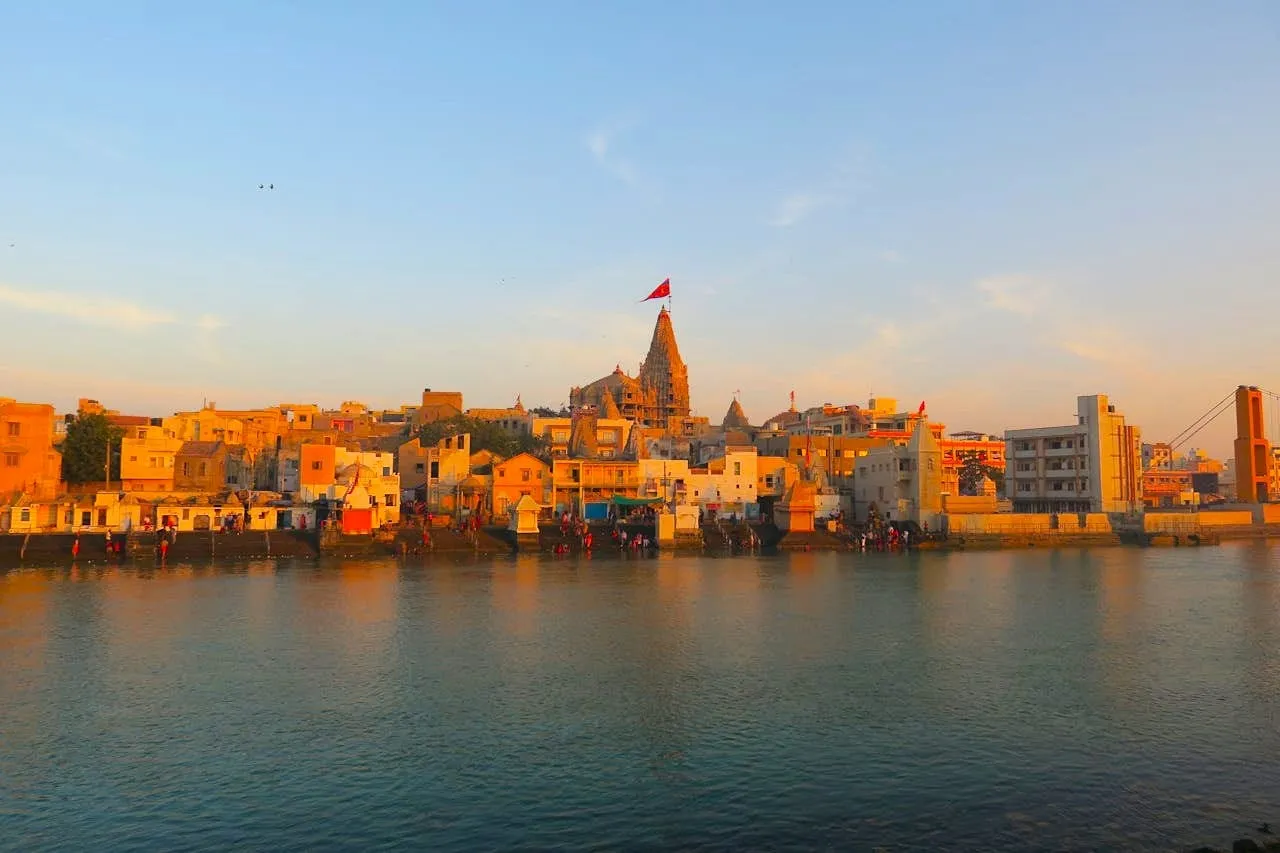
Kartik Purnima, celebrated on the full-moon day of the Kartik month (usually November), is one of the most auspicious days in the Dwarka pilgrimage calendar. Pilgrims take a holy dip at the Gomti Ghat sangam where the river meets the Arabian Sea, believing the waters possess special purifying power on this day. The temple and ghats are illuminated with thousands of oil lamps, creating a breathtaking sight after sunset.
Special prayers and extended darshan hours are held at the Dwarkadhish Temple throughout Kartik Purnima. The ghat area becomes extremely crowded from pre-dawn hours as devotees queue for the ritual bath. Arrive before 5 AM if you wish to bathe at the sangam, and follow the directions of temple volunteers for crowd management. Kartik Purnima falls during the pleasant winter season, making it one of the best festival dates to experience Dwarka's spiritual atmosphere.
Dwarka Weather by Month
Dwarka's coastal location moderates extreme temperatures compared to inland Gujarat, but seasonal variation still significantly affects your travel experience. Use the table below to match your visit dates with expected weather and crowd levels. For real-time conditions, check our live Dwarka weather page.
| Month | Avg. Temp | Weather | Travel Recommendation |
|---|---|---|---|
| January | 12°C – 25°C | Cool & pleasant | Ideal for darshan & sightseeing |
| February | 14°C – 27°C | Pleasant winter | Ideal for darshan & sightseeing |
| March | 18°C – 32°C | Warm spring | Good time; Holi celebrations |
| April | 23°C – 36°C | Hot | Moderate; carry sun protection |
| May | 26°C – 40°C+ | Very hot & humid | Off season; early morning darshan only |
| June | 27°C – 38°C | Pre-monsoon heat | Off season; lower hotel rates |
| July | 26°C – 33°C | Moderate rain | Good for lush scenery & Rath Yatra |
| August | 25°C – 31°C | Monsoon rains | Peak festive season (Janmashtami) |
| September | 25°C – 32°C | Retreating monsoon | Good time; pleasant coastal breeze |
| October | 22°C – 34°C | Post-monsoon transition | Pilgrimage season begins |
| November | 17°C – 30°C | Cool & pleasant | Ideal; Diwali & Kartik Purnima |
| December | 13°C – 26°C | Cool winter | Peak winter season; book early |
Peak vs Off Season
Crowd levels in Dwarka vary dramatically by season and festival calendar. Winter months (December–February) see the highest pilgrim and tourist footfall, with weekends significantly busier than weekdays. The Dwarkadhish Temple queue can stretch for 1–2 hours during peak hours in winter; arrive before 6:00 AM for Mangal Aarti or after 5:00 PM for Sandhya Aarti to avoid the worst crowds.
Festival periods — especially Janmashtami, Diwali, Kartik Purnima and Makar Sankranti — draw lakhs of devotees and need advance booking for hotels and transport. Summer (April–June) and weekday visits are the quietest. For practical planning, combine this guide with our Dwarka travel tips, how to reach guide and itinerary planner.
School holiday weeks in October and December push family crowds beyond normal winter levels — book trains and hotels as you would for a major festival even if no single festival falls on your dates. Gujarati New Year and Diwali week overlap with peak domestic tourism; temple-side dharamshalas enforce stricter check-in times. Shoulder weeks in early November and late February offer the best compromise of pleasant weather and manageable queues for first-time international pilgrims.
Corporate holiday long weekends in January and October behave like mini-festivals — hotel rates jump even without a religious calendar event. If your leave is flexible, prefer Tuesday–Thursday arrivals in winter for the shortest Dwarkadhish queues and easiest taxi availability for Bet Dwarka.
April pre-monsoon heat spikes before the first rains — I still see pilgrims in that window because hotel rates drop and queues shorten. If you must visit then, treat 5 AM to 10 AM as your only outdoor window and use AC hotel rest from noon to 4 PM. Sudarshan Setu and Nageshwar open areas offer little shade at midday.
Live weather on our dedicated page helps confirm ferry versus Setu decisions during monsoon — static month tables cannot replace same-day wind readings.
International pilgrims flying into Ahmedabad often ask whether to land a day early — I say yes for winter Char Dham groups because morning Dwarkadhish queues start forming before 6 AM and jet lag makes that harder on arrival day. Landing two nights before your first darshan lets you adjust, buy modest cotton near the temple lane, and confirm taxi rates without festival markup.
Plan Your Dwarka Trip
Written By
Dharmendra Hadiyal
Dharmendra is a travel editor from Saurashtra who writes about Devbhumi Dwarka and the surrounding region.
Frequently Asked Questions
Common Questions About Dwarka
Temple timings, how to get there, what to wear, how much to budget — the things pilgrims ask us most often.
October through March offers the most comfortable weather, with daytime temperatures between 12°C and 28°C.
Janmashtami falls in August or September (Bhadrapada month), with midnight aarti, decorations, and festivities at Dwarkadhish Temple.
Yes. Winter is peak pilgrimage season. Book accommodation in advance, especially around Christmas and New Year.
Planning Your Trip to Dwarka?
Darshan timings, how to get there, nearby temples, where to stay — we've put it all together so you can focus on the pilgrimage. Jai Dwarkadhish.