Local Pilgrim Route
Okha to Nageshwar Jyotirlinga
About 22 km by road from Okha — roughly 30–40 minutes. Routes, taxi fares, temple timings, and how to fit Bet Dwarka into the same day.
On this page
Distance
The distance from Okha to Nageshwar Jyotirlinga is approximately 22 km by direct road. The journey takes about 30 to 40 minutes by car or taxi.
If you travel via Dwarka city, the distance extends to roughly 41 km (Okha to Dwarka ~25 km, then Dwarka to Nageshwar ~16–18 km), taking about 45 to 60 minutes. For the reverse leg, see Nageshwar to Dwarka distance.
In practice, I treat this route less like a standalone transfer and more like part of an Okha hub day plan. Many pilgrims reach Okha by train early in the morning, look at the jetty first, then wonder whether to do Bet Dwarka before Nageshwar or after it. My local advice is simple: if you arrive fresh and the sea looks normal, check ferry movement and queue length first, but do not rush onto the boat blindly. If the line is already thick, go to Nageshwar first, finish darshan peacefully, and return toward the island when the morning rush starts thinning.
| Route | Distance | Travel time |
|---|---|---|
| Okha → Nageshwar (direct) | ~22 km | 30–40 min |
| Okha → Dwarka → Nageshwar | ~41 km | 45–60 min |
By Road
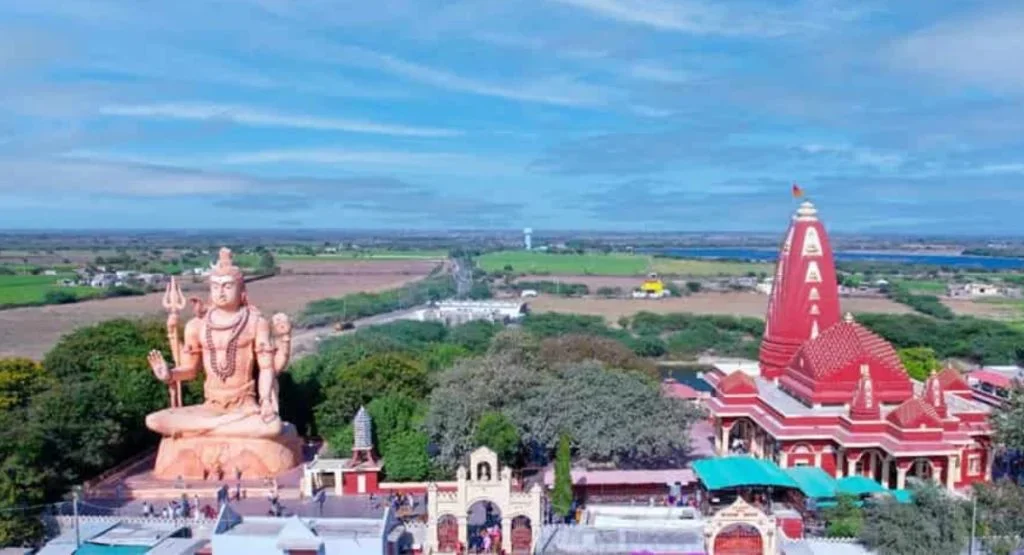
Nageshwar Jyotirlinga is one of the twelve sacred Jyotirlingas of Lord Shiva, in Nageshwar village within Devbhumi Dwarka district. The temple sits on the coastal highway between Dwarka town and Bet Dwarka island.
Okha itself is not just a railway name on your ticket. It is the working port edge of this pilgrimage circuit. When I meet visitors at Okha station, I tell them to expect a place that wakes up in layers: station movement first, shared autos next, tea stalls after that, then the fish market smell and jetty activity as the town fully opens. If you are sensitive to smell or travelling with children, move through the market stretch quickly and keep a scarf handy. The route to Nageshwar improves once you leave the port-side bustle behind and enter the open coastal road.
Option 1: Direct road (recommended)
Take the coastal highway from Okha toward Nageshwar. You skip Dwarka town entirely, which saves both time and distance.
- Distance: ~22 km
- Time: 30–40 minutes
- Road condition: Well-maintained state highway
Option 2: Via Dwarka city
If you wish to visit Dwarkadhish Temple first, travel Okha → Dwarka (~25 km) then continue to Nageshwar (~16–18 km). Best for pilgrims combining town darshan with the Jyotirlinga — use the 1-day & 2-day itinerary to plan stopovers.
- Distance: ~41 km
- Time: 45–60 minutes
Taxi and Auto
A taxi from Okha is the easiest option. One-way fare is typically ₹600–₹900; a full-day sightseeing taxi covering the whole Dwarka circuit runs ₹1,500–₹2,500.
Most pilgrims prefer a taxi or auto for this short stretch rather than waiting for infrequent direct buses from Okha.
If you arrive at Okha station with luggage, avoid changing vehicles too many times. Either leave bags in your hotel in Dwarka first, or negotiate one vehicle for the whole mainland circuit. Autos work for light travellers, but once you add elders, children, prasad bags, wet umbrellas in monsoon, or a return ride to the jetty, the convenience of a taxi becomes worth the extra money. Also ask clearly whether the quoted price includes waiting time at Nageshwar, parking near the temple, and the stop at Gopi Talav if you plan to combine all three.
Budget travellers sometimes ask me about buses from Okha. They do exist on the corridor, but they are not a neat pilgrimage service timed to temple schedules. You may save money and lose the calm of your day. For a family yatra, I would rather save on lunch than on the vehicle for this stretch.
| Mode | Approx. time | Cost range (INR) | Best for |
|---|---|---|---|
| Taxi (Okha → Nageshwar one way) | 30–40 min | ₹600–₹900 | Train arrivals at OKHA, jetty day plans |
| Full-day circuit taxi | 6–8 hrs total | ₹1,500–₹2,500 | Nageshwar + Gopi Talav + Bet Dwarka |
| Shared auto | 35–50 min | ₹80–₹150 per seat | Solo pilgrims, light bags |
| Via Dwarka (longer) | 45–60 min | ₹700–₹1,100 taxi | Dwarkadhish darshan first |
Trains terminating at Okha (OKHA) include long-distance services such as 22945 Saurashtra Mail and 18401 Puri–Okha Express on their run days — verify on IRCTC. From OKHA station, budget ₹150–₹250 for an auto to the jetty side or direct to Nageshwar road depending on your day plan.
Nageshwar Temple Darshan Timings
Morning darshan runs 6:00 AM – 12:30 PM; afternoon break 12:30 PM – 5:00 PM; evening darshan 5:00 PM – 9:30 PM. Entry is free; special pooja is around ₹300.
Compare with Dwarkadhish Temple timings when planning a same-day circuit. Visit Nageshwar in the morning (6:00–9:00 AM) for peaceful darshan with shorter queues.
This becomes especially important if you are balancing jetty timing with darshan timing. Ferries and passenger movement toward Bet Dwarka usually build up after the first morning wave. So if you reach Okha by dawn train and can move fast, you have two workable patterns: jetty first if the crossing looks smooth, or Nageshwar first if the ferry side already looks crowded. I personally prefer Nageshwar first for first-time pilgrims because the temple darshan is more predictable than the sea-facing movement at the jetty.
| Session | Timing |
|---|---|
| Morning darshan | 6:00 AM – 12:30 PM |
| Afternoon break | 12:30 PM – 5:00 PM |
| Evening darshan | 5:00 PM – 9:30 PM |
Entry fee: Free · Special pooja: ₹300
Combined with Bet Dwarka
A practical same-day plan from Okha: Nageshwar in the morning, then the Bet Dwarka ferry from Okha jetty. Okha is the port town that serves as the gateway to Bet Dwarka island.
Hire a full-day taxi from Okha/Dwarka to cover Nageshwar, Gopi Talav, Bet Dwarka and return — usually the most cost-effective option. Carry cash for offerings, auto fares and ferry tickets.
Whether you arrive by train at Okha / Dwarka railway or stay in Dwarka town, this 22 km hop is an essential part of any pilgrimage. Dress modestly as with all Gujarat temples.
Here is the day plan I suggest most often. Reach Okha station, freshen up as much as possible, and take tea before deciding anything. If you are carrying heavy bags, do not drag them to the jetty; either keep them in a booked vehicle or finish hotel check-in first. Move next toward the jetty side only to understand the current crowd. The fish market area can be busy, damp and strong-smelling in the morning, so many pilgrims prefer to cross it once, note the situation, and return to the cleaner road toward Nageshwar. Finish Nageshwar darshan, optionally add Gopi Talav, then come back for Bet Dwarka when your group is mentally settled. That order keeps the holy visit from feeling like a transport chore.
For those driving themselves, parking is usually easier to manage in segments than by trying to leave the vehicle at one point and cover everything on foot. Park properly near the temple areas, keep small cash for attendants, and do not leave valuables visible inside the car. At Okha jetty, space and movement can feel more chaotic on peak days. If your group includes seniors who dislike crowd compression, consider using Sudarshan Setu access plans where suitable instead of relying only on the ferry mood of the day.
During monsoon, this route stays possible but needs patience. Roads can remain motorable while sea conditions change the rhythm of island travel. That means Nageshwar often becomes the more reliable anchor of the day, and Bet Dwarka becomes the flexible piece. Carry sandals with grip, protect phone and prasad from spray or sudden rain, and keep one dry cloth in the vehicle. In Shravan and other Shiva-heavy dates, also expect larger devotional traffic around Nageshwar itself. If you plan calmly, Okha, Nageshwar and Bet Dwarka still fit beautifully in one day; if you rush, the same circuit can feel more tiring than sacred.
Best season: October–March keeps Okha hub days predictable — morning trains arrive in cool air, Nageshwar queues move steadily, and jetty boats run often enough that you can choose ferry vs bridge with comfort. Summer afternoons bake the open coastal road; start early. Monsoon means checking ferry status twice — once at hotel breakfast, once at the jetty — before committing elders to a boat.
Okha station tea stalls open before dawn — useful if your train arrives hungry. Do not eat heavily before a ferry if you are prone to seasickness; dry biscuits and chai are enough until you return to Dwarka for lunch. The fish market smell near the jetty is strongest 6–9 AM; many pilgrims simply walk through with a scarf and focus on the passenger counter ahead.
The direct Okha–Nageshwar road skips Dwarka town entirely — use it when Dwarkadhish darshan is already done or scheduled for evening. The via-Dwarka route (~41 km) only makes sense if you need Jagat Mandir first or your hotel is in town and you are picking up family mid-route. Most OKHA train arrivals with light bags should default direct to Nageshwar or jetty reconnaissance, not a Dwarka detour.
Shravan Mondays transform Nageshwar from a 30-minute stop into a two-hour compound visit — if your OKHA arrival falls on one, shift Bet Dwarka to the next day and do Nageshwar + Dwarka town darshan only. Local taxi drivers know this rhythm; listen when they say the queue is "today's queue" not normal. Carry water and a hat — the Shiva statue plaza has little shade at noon.
Related guides
Plan Your Dwarka Trip
Written by
Lead Editor & Pilgrimage Guide · Independent Dwarka travel guide
Last updated: August 2026
Frequently Asked Questions
Okha to Nageshwar FAQs
Distance, buses, Bet Dwarka same-day plans and nearest stations.
The direct road distance is approximately 22 km, taking about 30–40 minutes by car.
Yes. Nageshwar is on the route to Bet Dwarka. A typical plan: morning darshan at Nageshwar, then take the ferry from Okha jetty to Bet Dwarka.
Direct buses are limited. Most pilgrims hire a taxi or auto-rickshaw. GSRTC buses from Dwarka to Nageshwar are more frequent.
Nageshwar is approximately 16–18 km from Dwarka, a 20–25 minute drive. See our Nageshwar to Dwarka distance guide.
The nearest railway stations are Dwarka and Okha. Okha is a larger junction with more train connections.
Planning Your Trip to Dwarka?
Darshan timings, how to get there, nearby temples, where to stay — we've put it all together so you can focus on the pilgrimage. Jai Dwarkadhish.