Table of Contents
- Dwarkadhish Flag Ceremony Significance
- Dhwaja Ritual at Jagat Mandir
- Flag Ceremony Timings
- Dwarkadhish Temple Flag Tradition
- How to Witness the Flag Ceremony
- Timing and Viewing Etiquette
- What the Ritual Signifies
- Sound, Drums, and Seating
- Weather and Visibility
- Viewing & Donation Practicalities
- Where to Stand and What the Flags Mean
- Sponsoring a Flag — Family Tradition
- Audio and Commentary
- Wheelchair and Elder Access
- Check Daily Schedule
- Local tip from our editor
- Common mistake
- Verify before you go
This guide covers the Dhwaja flag-changing ritual at Dwarkadhish Temple in detail; for overview see Dwarkadhish Temple.
Look up while you wait in the Dwarkadhish Temple courtyard and you may see pilgrims suddenly cheer: the Dhwaja Arohan — the ceremonial changing of the great flag on the shikhara. The banner is traditionally woven from about 52 yards of cloth and marked with sun and moon emblems. For many devotees, watching the flag rise is as memorable as aarti itself.
Dwarkadhish Flag Ceremony Significance
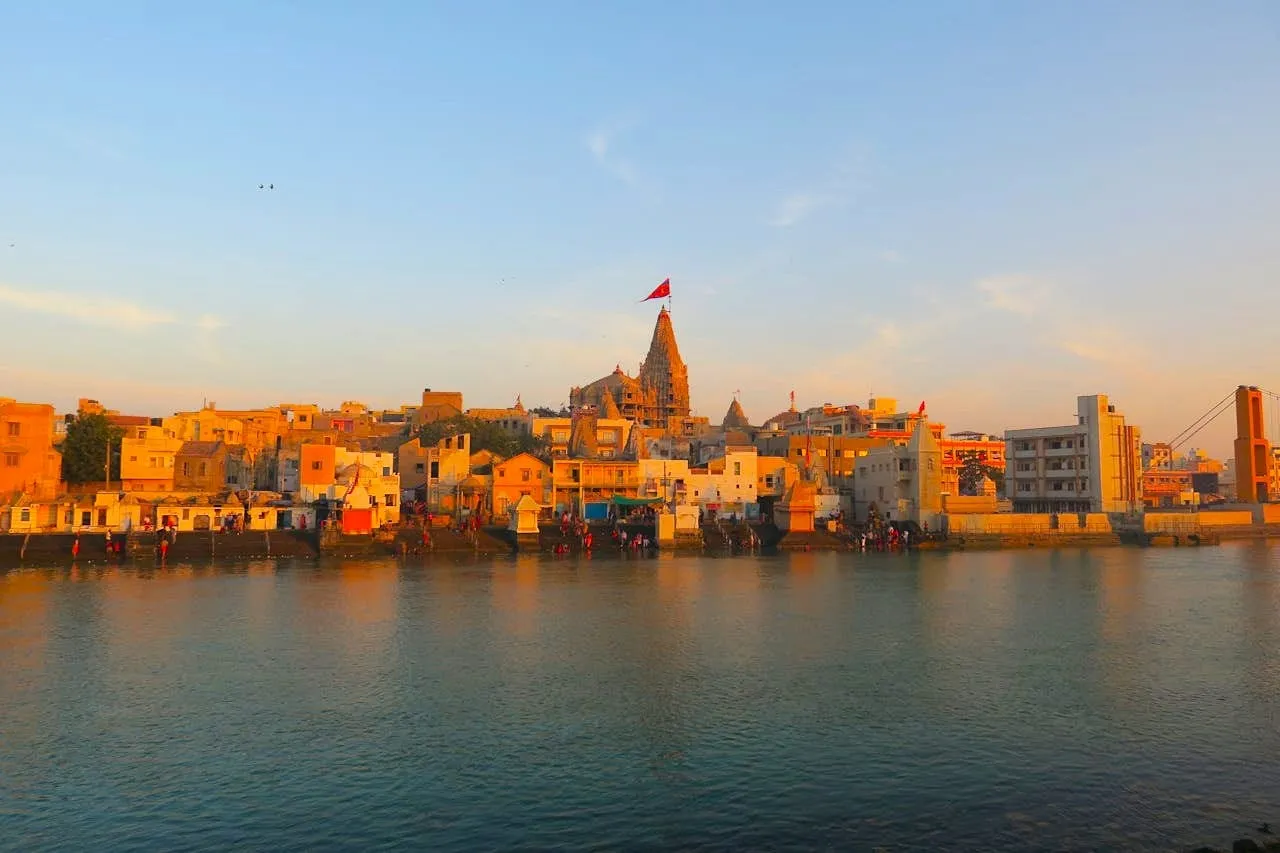
In temple symbolism, the flag signals that the Lord "resides" and that the royal household of Dwarkadhish continues its daily rhythm. Jagat Mandir's tall shikhara makes the cloth visible across parts of town — a moving landmark above limestone carvings and the famous 72-pillar lore of the shrine.
The sun and moon motifs are read by devotees as signs of continuity — day and night under divine kingship. The ceremony reminds visitors that Dwarka's heart is a working sacred institution, not only a monument.
Dhwaja Ritual at Jagat Mandir
From the courtyard you will usually see: preparation of the new flag and team positioning; attention rising through the crowd; the climb and hoist sequence performed by authorised sevak teams; and a collective cheer or folded-hand silence as the cloth catches the wind.
Only authorised temple staff perform the ritual. The flag team climbs the shikhara's 56 steps — visitors watch from permitted courtyard areas. You are a guest in lifelong seva; watch more than you film.
Flag Ceremony Timings
The flag is changed daily as part of temple service, traditionally five times a day though exact clock times shift with season, daylight and festival calendars. Viral reels are not a timetable — on arrival, ask temple volunteers or follow crowd movement when the flag team appears.
Plan unhurried time in the complex around morning or evening ritual windows. For aarti structure and open hours, use our darshan timings page and confirm festival changes locally.
Dwarkadhish Temple Flag Tradition
The 52-yard flag tradition is unique among major Indian temples. Families and devotees sponsor flag offerings as seva. The cloth bears sun and moon symbols representing eternal kingship. Changing the flag five times daily has been observed for generations, linking each day to Krishna's continuing presence in Dwarka.
On Janmashtami and Kartik Purnima, courtyard density rises sharply. The ceremony remains the same in spirit but harder to see in full — arrive earlier and accept you may catch only a fragment of the hoist.
How to Witness the Flag Ceremony
Stand only where priests and volunteers indicate. Keep aisles clear for the flag team and security. Hold children so they do not surge forward. Phones down if staff request. Do not bribe anyone for a "special roof view" — never attempt to climb toward the shikhara.
Pair the ceremony with morning Mangala darshan, then continue to Gomti Ghat and Rukmini Temple. Wear slip-on footwear, carry a light scarf for sea breeze, and give the sevak team space. The 52-yard cloth teaches how Dwarka still crowns its King each day.
Timing and Viewing Etiquette
The fifty-two-yard flag change at Jagat Mandir follows temple ritual clock — not a fixed tourist show time — and varies slightly by season and festival load. Arrive before the courtyard fills; security directs standing zones to keep lanes clear for the seva team carrying the cloth up the shikhara. Phones may be restricted when staff ask — the ceremony is religious, not a concert. Women and men both attend; modest dress and patience in heat matter more than securing a front row. Combine with morning darshan and Gomti Ghat so you are already near the temple when drums begin.
What the Ritual Signifies
Daily flag renewal crowns Krishna as living king of Dwarka — understanding that frame makes the wait worthwhile. The new cloth is raised after prayers; old flags are treated as sacred cloth, not souvenirs. Do not attempt rooftop access or bribe for unauthorised views — legitimate sightlines from the courtyard suffice.
Sound, Drums, and Seating
Drums and conch announce the flag team's movement — follow crowd flow rather than cutting across the courtyard. Elders may sit on side platforms where ushers direct; arrive before the main doors crowd seals the view.
Weather and Visibility
Winter evenings bring sea breeze into the courtyard — a light layer helps after sunset even when daytime felt warm. Monsoon clouds can obscure the moment the flag reaches the top; pilgrims still consider the ritual complete once the seva team finishes. If you are photographing, burst mode helps because hands shake in crowd surge — respect neighbours' sightlines and do not raise phones above head height for minutes at a time.
Viewing & Donation Practicalities
The flag is changed five times daily — timing shifts slightly by season; ask at the temple office the day before. Viewing from the outer courtyard is free; closer access may require being in the queue early. Flag sponsorship (dhwaja seva) involves a donation often in the ₹5,000+ range with advance booking — confirm current rates locally. Arrive 30 minutes before the slot you want; crowds swell during Kartik and Janmashtami.
Non-sponsors can still watch from outer courtyards — arrive early and follow volunteer directions during Kartik crowds. Photography of the flag change may be restricted; obey temporary festival signage. Donation tiers and seva slots change — verify at the temple office, not third-party agents.
The 56-step Swarga Dwar climb after flag viewing is traditional — pace elders slowly in crowds. Non-Hindu visitors are welcome in outer areas; inner sanctum rules still apply.
For overview see Dwarkadhish Temple. The flag change at the shikhara summit is the one spectacle I never skip — arrive 45 minutes before posted time for a sightline near the main courtyard pillar.
Where to Stand and What the Flags Mean
Families line the east courtyard; photographers want slightly elevated left flank without blocking devotees. Each flag is stitched fresh — donation tiers ₹500–₹5,000+ if your family sponsors a flag someday. Ceremony runs 15–25 minutes; security closes bags briefly — carry minimal valuables.
Sponsoring a Flag — Family Tradition
Some families sponsor shikhara flags after births or memorial years — temple office quotes ₹2,000–₹10,000+ depending on size and queue. Plan months ahead for Kartik or Janmashtami slots. Even as spectator, arrive early — latecomers see only raised flag, not the climb.
Audio and Commentary
No official PA — locals whisper flag donor names. Ask hotel pandit for meaning of colours if curious. Ceremony not every hour — confirm day's schedule at temple office, not random blogs.
Wheelchair and Elder Access
Courtyard viewing possible; shikhara climb is clergy only — elders see flag rise from ground level fine if arrival early.
Check Daily Schedule
Flag change not every sunset — temple office board lists today's ceremony time; do not trust outdated blog hours.
Local tip from our editor
For the flag ceremony, arrive with enough buffer to clear the surrounding lanes and settle into a viewing spot instead of trying to push forward at the last moment. Ask temple-side shopkeepers which side currently gives the clearest upward view because crowd flow shifts through the day.
Common mistake
Many visitors know the ritual is important but do not account for access time, so they reach the temple area after the visible part of the ceremony is already over.
Verify before you go
Confirm the same-day flag change timing and whether any special festival arrangement has altered normal public viewing access.
Plan Your Dwarka Trip
Written by
Lead Editor & Pilgrimage Guide · Independent Dwarka travel guide
Last updated: August 7, 2026
We verify temple timings, routes, and fares against notice boards and recent pilgrim reports. See our editorial policy.